Posted 29 May
 Kaitlyn Davison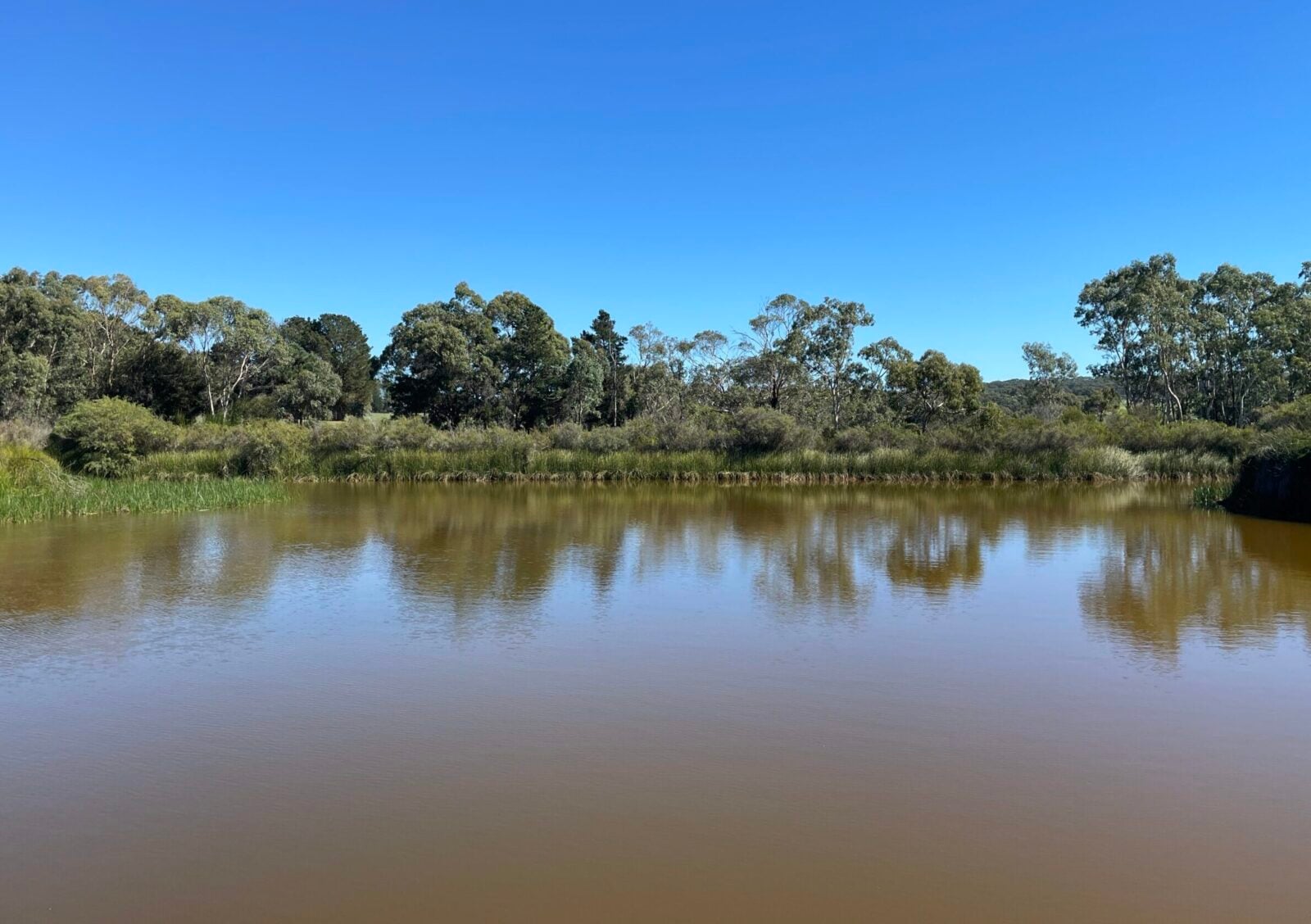
In April this year, MOD. and a small group of students attended a field trip to Yundi Nature Conservancy, thanks to generous sponsorship from SA Water.
Some of the MOD. team have walked on Warki Country a few times now, nurturing an ongoing connection to the place and to those who facilitate our time there, John Fargher who is the current landholder and a restoration ecologist, with Mark Koolmatrie who is a well-known Ngarrindjeri storyteller and experienced tour guide.
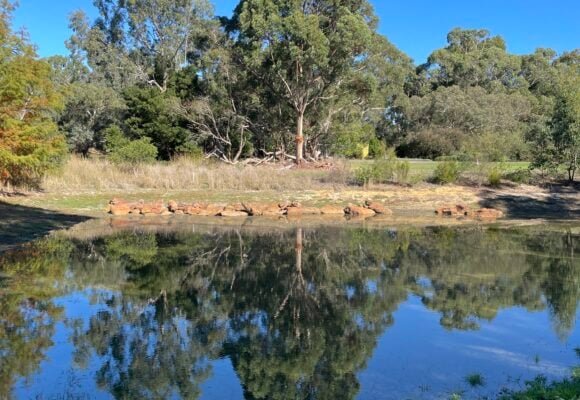
I can’t help but smile when witnessing John and Mark together, the way they easily joke with each other while sharing their passion and care for Country. Their friendship and respect for each other weaves seamlessly into the way they interact, all while leading a small group of people around the swamp and surrounding woodland that is Yundi.
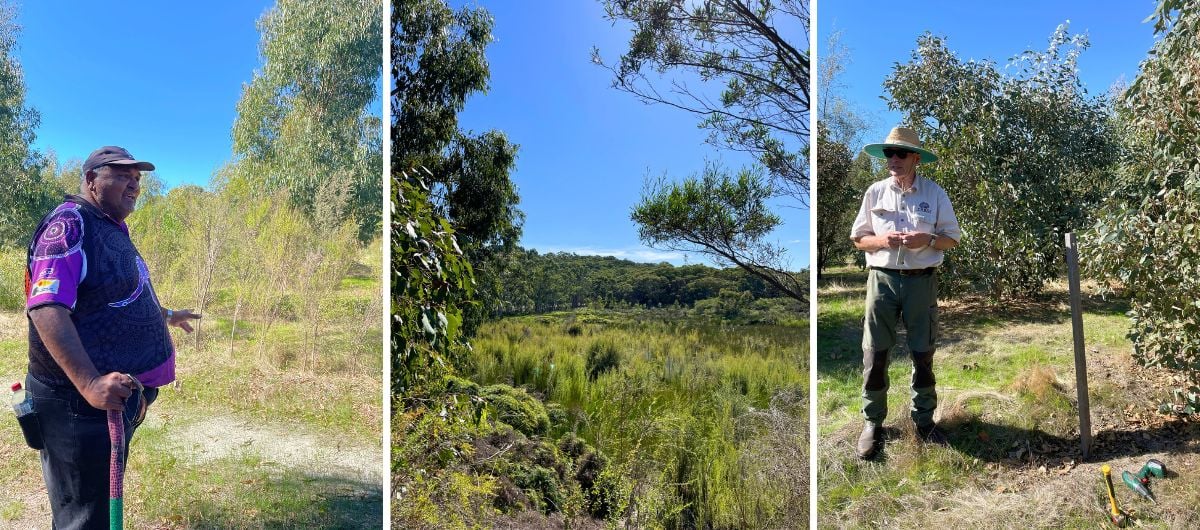
We take small groups of people with us each time we visit, this is mainly due to the narrow walking trails that are used to traverse the swampland, and a desire to step lightly on the landscape with a smaller group. It is also an opportunity to truly listen to the words of John and Mark, along with the whispers of the wind, insects, grasses, and a small trickle of flowing water. The impact of being in a place like Yundi is strongly felt, it is reinforced when John shows photos or describes how the land has changed in recent time. How much can change in just one lifetime? This is a question that John brought to us as we stood shaded amongst a valley of gum trees, what was previously empty pastoral land. In just 40-50 years it has transformed to what it is now.
The process of ecological restoration not only benefitted us on that particularly sunny April day, but it also brought back native species such as the Australian White Ibis. A bird known for its adaptability, colloquially termed the “Bin Chicken” in urban settings, this culturally significant animal plays an important part at Yundi. The Ibis feeds on a grub that resides in the surrounding farmlands, the grub was a strong competitor for the food source that the livestock relied on – at one point the biomass of these grubs outweighed that of the cattle, now significantly lessened. The return of this ancient-looking bird bringing with it a new beginning.
Not only is there a return of vital fauna but also an incredible increase in variety of native flora, some areas going from a mono-species takeover to now having 80 or more cohabitating. When John mentions a plant species, he will automatically say the scientific name as if it is second nature. I can’t help but think of the archive of Latin names that must be leisurely swimming through his mind as he walks this land. He is just as quick to joke about Mark and his easy ability to have a decent yarn. This is one of Mark’s greatest strengths, his words and authentic approach to sharing stories and knowledge. He asked the group a question when introducing us to the cultural significance of this place for Ngarrindjeri peoples and the impactful loss of Warki knowledge; what is your beginning today? As the day went on, I saw the question form into; what will each of the participants carry with them from today and how will they share that with others?
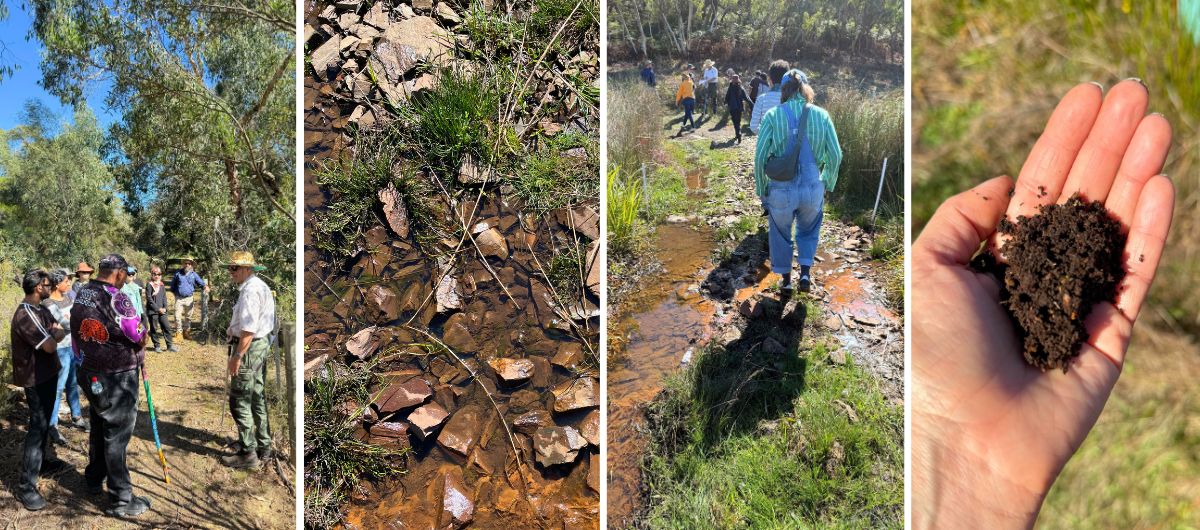
Some of the attendees were international students in Australia for the first time, with the thought of kangaroos being local to the land exciting them. It reminded me that perspective is key to inspiring change. Hearing and learning from both the scientific and cultural perspectives of John and Mark solidify the purpose and importance of collective and collaborative action for the future of our local environments. What starts as a simple act, like planting a seed, becomes a small beginning that can grow into something that will feed, protect, welcome and cultivate diverse landscape experiences.
How much can change in just one lifetime?
And what is your beginning today?
While travelling back to Kaurna Country, a couple of the students were curious about why John had chosen the word “conservancy” as part of the title and descriptor for the work being done at Yundi. Why not, “reserve” or other familiar titles for pockets of land like this?
So I sent John an email, and he provided a very John answer:
“The word conservancy dates back to the mid-15th Century and has its roots in Medieval Latin conservantia, derived from the Latin conservare (“to keep, preserve, keep intact, or guard”). This is aligned with the concept of a conservator (keeper/ guardian) and was historically used to describe the guardianship of rivers and forests.
In the Yundi context a conservancy is the organisation and area dedicated to the protection and preservation of natural resources, wildlife, or specific environmental values. Related uses include Second Nature Conservancy (Strathalbyn), The Nature Conservancy (a large, US-based, international NGO), and the Tasmania Land Conservancy (a large Tasmanian NGO).”
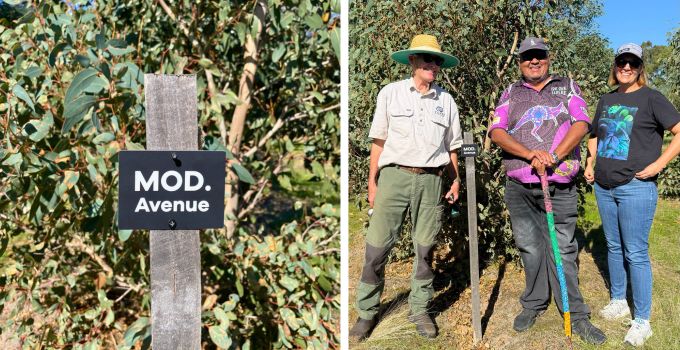
It is always a pleasure to have Mark and John generously share their knowledge and experience with MOD. and those who join us along the way. We were able to celebrate our ongoing relationship with Yundi by placing a sign on “MOD. Avenue” – a line of trees that include those planted by MOD. staff around 5 years ago, we look forward to watching them grow for many years to come.