
Posted 6 Oct
 Saskia Nicholls
From Beans to Bars: Unwrapping the Ethics of Chocolate and Consumer Responsibility
Food is central to culture. This truth transcends geographic borders, connecting up
communities from all corners of the world. Here on the traditional lands of the Kaurna
Meyunna, we find ourselves in the season of Kudlilla, the wet season, a signifier of
what foods are seasonally accessible.
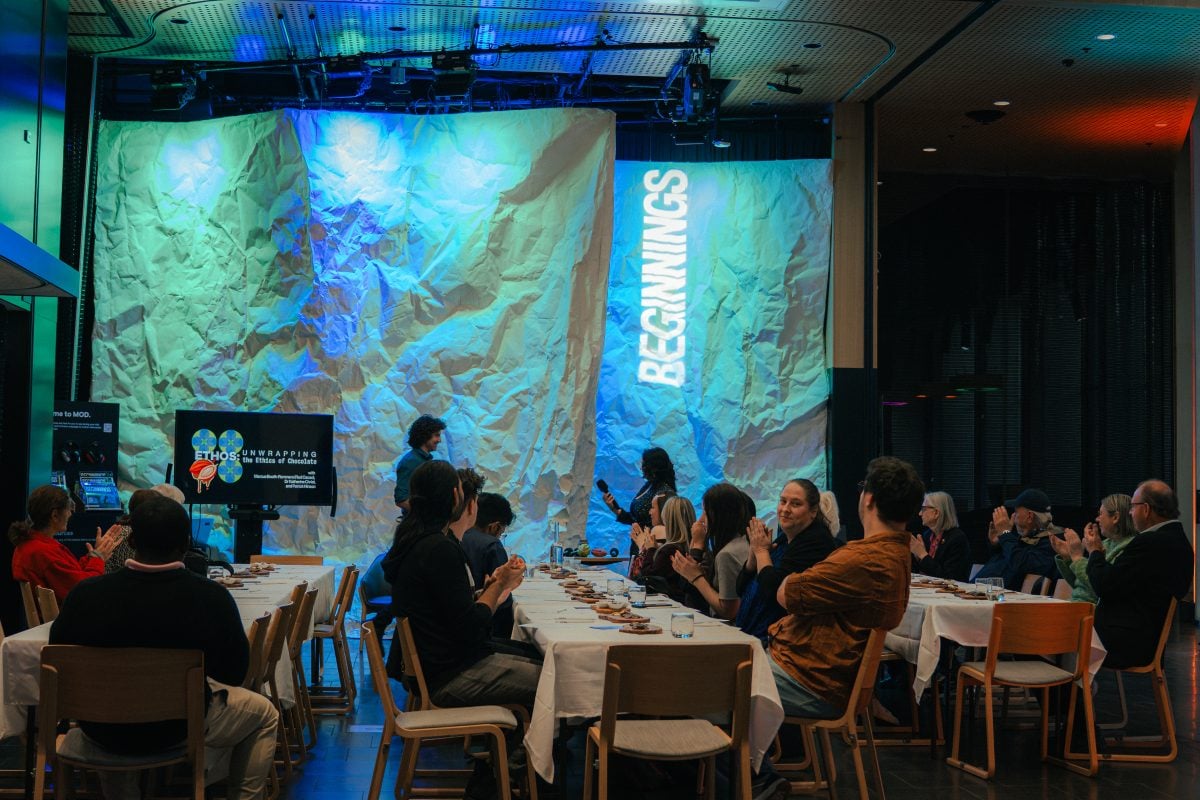
Our host for the latest Ethos event, Dr Debbie Devis, opened the evening by
reminding us that ‘our place dictates the types of foods that are available to us’,
bringing us together and grounding our cultural networks. But how does this translate
into our current globalised food systems? And how much do we really know about
where our ingredients come from – and who picks, processes and packages them?
Over the course of the evening, we explored these questions through the familiar
and much-loved example of chocolate. This everyday treat also connects closely
with our current exhibition, BEGINNINGS, where a gallery entitled: ‘The Convenient
Store’ delves into the agency we possess in our grocery shop decision making.
Following the lifecycle of the Cacao fruit
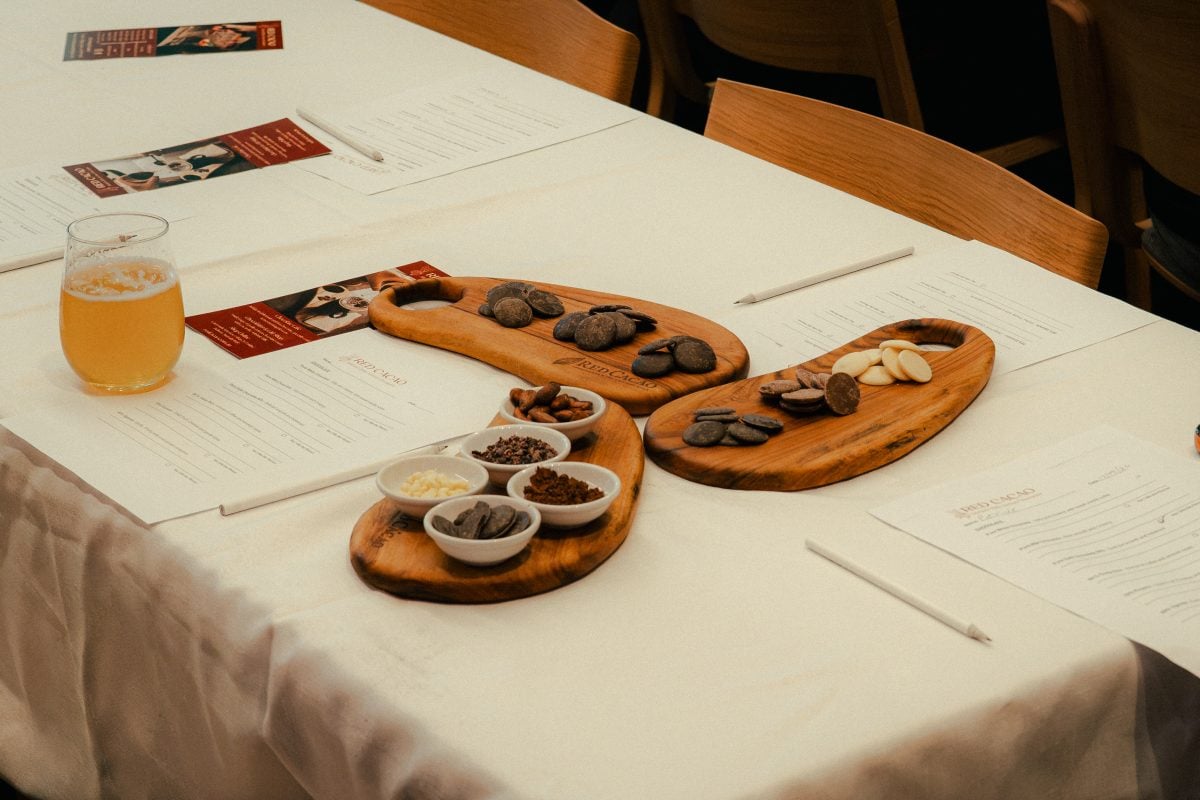
Participants gathered as the tantalising scents of chocolate wafted up from the
tables. These tasting boards had been kindly supplied by Red Cacao’s founder and
chief chocolatier, Marcus Booth-Remmers. Having studied his craft in Germany and
spent time on Cacao plantations in Indonesia, he brought a chocolate maker’s
perspective to the discussion – sharing insights into sourcing, production,
craftsmanship and the challenges businesses face when responding to ethical
concerns.
Marcus began by taking us through the stages of chocolate production, from almond
shaped beans to the finished product. He detailed how unusual the cacao tree is – in
that the fruit actually grow from the trunk of the tree as opposed to the branches, with
harvests taking place twice per year. Participants were welcomed to try these
delightful looking beans, though warned to have a glass of water handy due to the
strong, bitter taste…
The beans undergo a fermentation, roasting and ‘conching’ process next, finally
being ground smooth for up to 72 hours as the cocoa butter is separated from the
cocoa powder.
It was now time to dig into the second and third platters: these tasting boards
featured an assortment ranging from white chocolate through to 80% dark chocolate.
Many were examples of ‘single-origin chocolates’, meaning their flavour profiles
reflect the particular geographic regions in which their cacao was grown. Participants
sampled Costa Rican 64%, Ecuadorian 70% and Ugandan 80% chocolate among
others, recording their initial impressions as they went. The room quickly filled with
appreciative sounds.
A Wider Lens: The Systems Behind the Supply Chain
Having tasted the finished product, we turned our attention to discussing some of the
specific systems at play within the cacao supply chain.
Such large scale, complex systems are fraught with ethical, social and environmental
disputes, which shift depending upon cultural context. To delve into this in true Ethos
fashion, we were joined by researchers from Adelaide University for a fascinating
panel discussion. Dr Katherine Christ is a Senior Lecturer, whose research focuses
on modern slavery risk and how businesses identify, manage, and report on modern
slavery within their operations and supply chains. Also joining us was Patrick Ninson,
a PhD candidate whose doctoral research concentrates on modern slavery in the
Ghanaian cocoa industry, examining ethical and social concerns within one of the
industries at the centre of the supply chain.
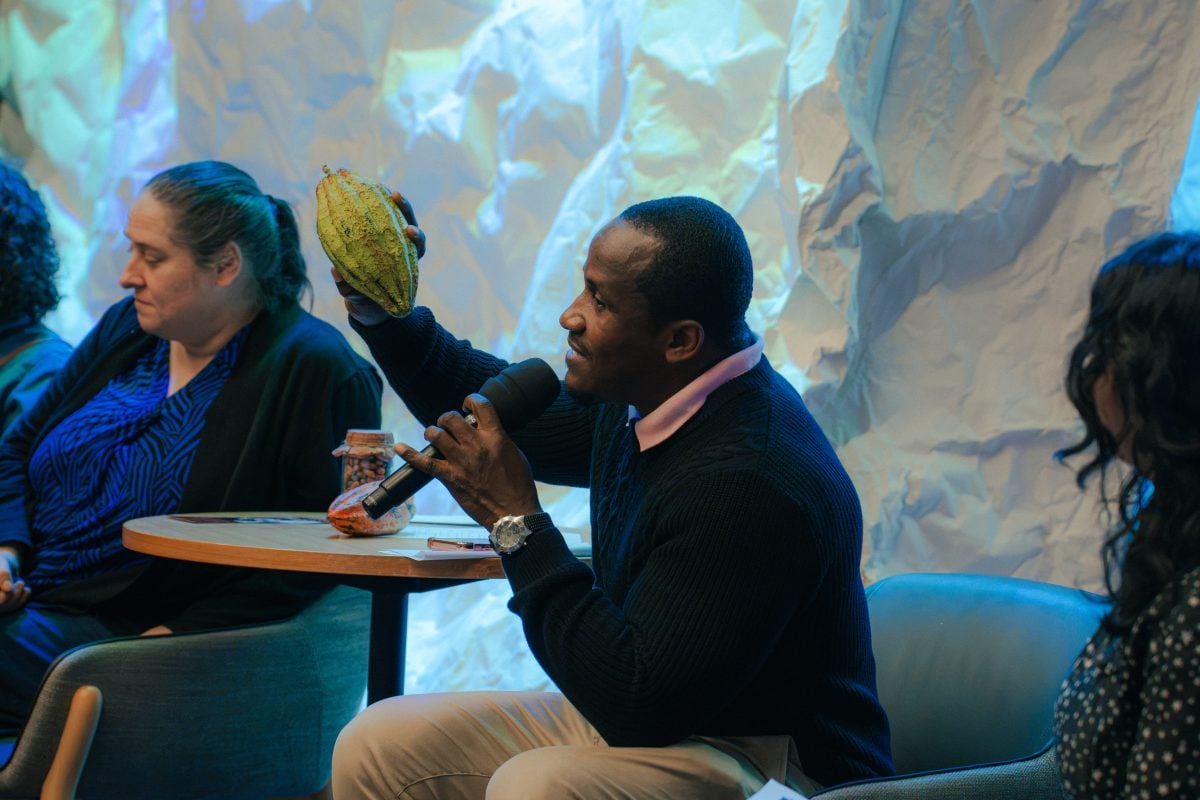
Patrick Ninson kicked off the panel by discussing the vulnerabilities faced by cacao
farmers in Ghana, stressing the discrepancy between larger and smaller scale farms.
Despite accounting for 90% of overall cacao production globally, smaller farms face
the increased strain of manual labour, with workers having to repeatedly carry 65kg
bags across often rough, inaccessible terrain. There is also the consequential
decision of whether to farm traditional or hybrid crops… while hybrid crops produce
fruit faster, they have lower disease resistance and shorter lifespans, seeing farmers
income security decline within twenty to thirty years of planting. By contrast,
traditional crops may last up to 80 years, though requiring a decade of care prior to
bearing fruit.
There is deep concern too, with the use of forced labour and specifically child labour
within the industry, something that came up repeatedly from panellists. Often within
family-run farms, children are expected to work in these same physically demanding
roles, risking injury and harm.
Here however, Patrick emphasised the necessity of understanding the cultural
context, rather than imposing our own biases – as there is also a notion of looking to
‘pass on the profession to the children and maintain the family heritage’. And yet
increased pressures from perpetual corruption within government and so called
‘middlemen’ buyers has led to farmers not being paid their fair share – putting
labourers, including children, at greater risk.
But who holds responsibility for upholding ethical practices?
Dr Katherine Christ poses, ‘there are bigger socio-political issues at play’ within this
conversation, and she feels that the role of inter-governmental pressure is central
moving forwards. Tracing supply chains can be difficult, particularly in a
predominantly cash-based industry. Stronger government frameworks and clearer
standards could help improve transparency and ensure we are ‘equitably sharing the
monetary benefits of the product’.
There is also the matter of consumer responsibility, as even before the customer is
making these ethical decisions, the business owners are making their own. Marcus
reflected on Red Cacao’s growth and how increased buying power has enabled the
business to visit countries of origin and build relationships directly with producers.
These relationships, he explained, “build the link in the conversation, meaning we
can tell the stories” – an important step towards greater transparency and trust
throughout the supply chain.
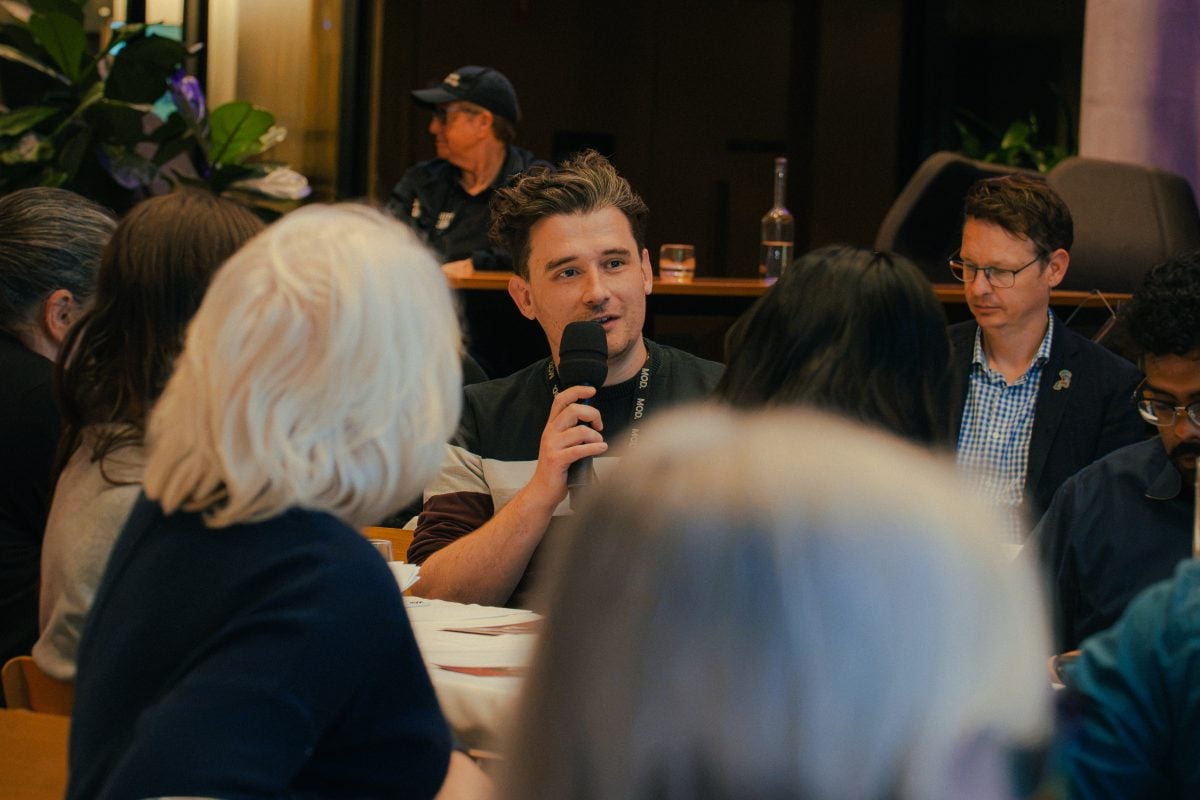
The last portion of our evening saw participants reflect on their own ethical decision-making
skills in the grocery aisle.
One participant voiced that they feel as though their personal choices seem
insignificant in the face of large scale, geo-political lobbying. Some expressed
frustration at the lack of visibility around where their money ultimately goes, even
when paying a premium for so called ‘fairtrade’ or ‘slavery free’ labels. While
certification can provide farmers with opportunities to charge more for their produce,
the costs involved in obtaining certification can also create financial barriers for
producers.
The value of curiosity:
Ultimately, chocolate is far more than a simple indulgence. From the cacao farmers
who grow the beans to the businesses and consumers who shape the supply chain,
every step carries ethical considerations. As is the case with many industries that
span multiple continents, the perpetuating effects of colonisation are deeply
embedded, and we must all actively learn what it means to de-colonise, wherever we
sit within that chain.
While individual choices may feel small within such a complex global system, greater
awareness is fundamental and can help us ask better questions about what we buy,
who benefits, and the systems behind the products.
Curiosity is thus one of our greatest strengths as we unwrap these ethical dilemmas.
Saskia Nicholls (she/her)
6 Oct 2026