Interested in finding new ways to develop resilience? Make it a career with Adelaide University
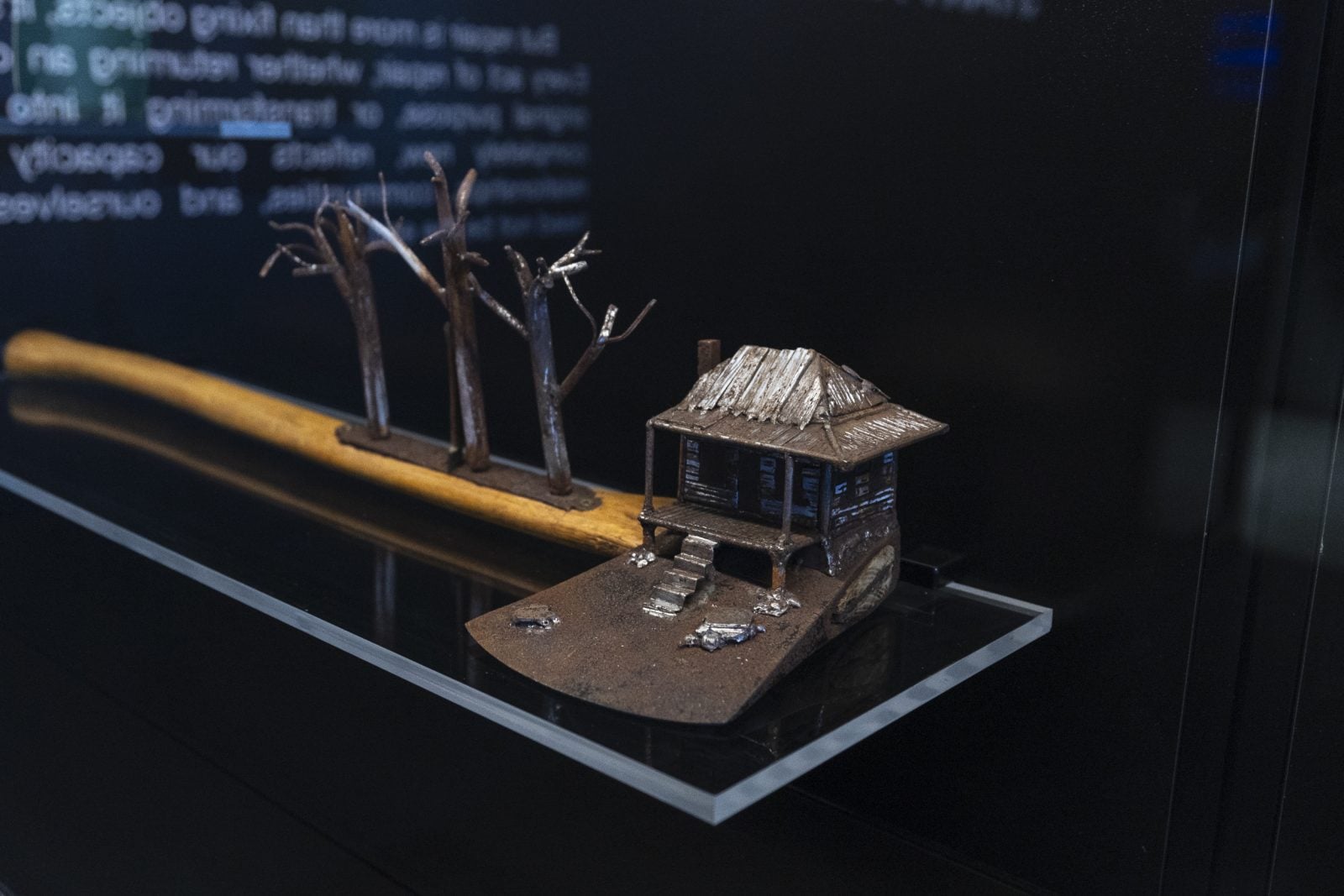
Exhibit Details
Open JanNov 2026
- How do you start again?
- Delve deeper
- Artwork credits
When something breaks, we can discard it, hide the damage, or bring it back to life. Visible repairs of mended cracks, stitched seams, and patched surfaces tell a story of care, ingenuity and resilience. In a world of mounting waste, repair keeps materials in circulation, closing loops instead of feeding landfills.
Repair is more than fixing objects—it’s a mindset. Every act of repair, whether returning an object to its original purpose, or transforming it into something completely new, reflects our capacity to mend relationships, communities, and ourselves. Damage need not be the end.
Explore the possibilities of Transformative Repair through this interactive digital collaboration with Adelaide University’s Realities Extended.
What is Transformative Repair?
Transformative Repair is a research platform for investigating and cultivating new forms of creative repair practice among artists, designers, craftspeople and creative professionals.
We rarely repair and reuse objects these days, choosing instead to replace them with new and “better” versions. The significance of objects and the craft of repair have consequently lost their value in today’s world.
“I started out as a designer struggling with the problem of designing objects that become waste. This was very tricky for me to resolve, and ultimately, I came to the conclusion that I needed to focus on repair as an ethical response as a designer.
Everybody is burdened by the psychological problem of waste. It’s something I think that’s really relatable.
We have broken things in our homes, we throw out things that no longer function the way that we want to, and that can kind of have a burden on the way that you think and the way that you engage with the world.
There’s a kind of emotional resilience that gets activated through creativity, something that gives us inspiration that life is worth living.
A visible repair advocates for more repair in the world. How we overcome trauma, how something that is broken can come back together, how we can use repair practices creatively to kind of reconnect and re-strengthen society and make us more resilient, and how that inspires people to keep going.”
– Guy Keulemans, designer, artist and researcher, Adelaide University
Transformative Repair Projects, Guy Keulemans, Artist, Designer and Researcher, Adelaide University
Interactive design, Realities Extended, Adelaide University
Elizabeth’s Knitting Needles and Justine and Bruce’s Vase were commissioned in Object Therapy (2016), a transformative repair project in partnership Hotel Hotel, UNSW Sydney and the Australian National University led by Guy Keulemans, with curation by Guy Keulemans, Andy Marks, Niklavs Rubenis and Dan Honey, and photography by Lee Grant.
Cecilija’s Coffeepot was commissioned in Transformative Repair Regional (2019), a UNSW Sydney project in partnership with Design Tasmania led by Guy Keulemans and Niklavs Rubenis, with photography by Connor Patterson.
Model Aeroplane Crown and Transformed Axe were commissioned in Transformative Repair x ADC (2022), an Australian Research Council (ARC) project in partnership with UniSA, UNSW Sydney and the Australian Design Centre, led by Guy Keulemans, Trent Jansen and Lisa Cahil, with photography by Traianos Pakioufakis
The Alice Potter Necklaces repair was commissioned in Transformative Repair x JamFactory (2024), an ARC project in partnership with UniSA, UNSW Sydney and JamFactory, led by Guy Keulemans, Trent Jansen and Brian Parkes, with photography by Connor Patterson.
Archaeologic Vase is an ARC funded transformative repair created for this exhibition, with photography by Connor Patterson and videography by Alex Robertson.
Additional photography provided by Lee Grant, Traianos Pakioufakis and Connor Patterson.
These Transformative Repair projects were conducted from 2016 to 2025 on First Nation lands, including those of the Kaurna people of Tarntanya / Adelaide, Ngunnawal and Ngambri peoples of Canberra, the Nyikina of the Kimberley region and the Dharawal, the Gadigal and Bidjigal of the Eora Nation in Sydney and the palawa people of Litarimirina, on Kanamaluka / Launceston.
Credits
- Transformative Repair Artists Artworks
- Guy Keulemans Curation
- Realities Extended Digital
- Studio 1 Exhibitions Display Build