Interested in cultivating the future of what we grow? Make it a career with Adelaide University
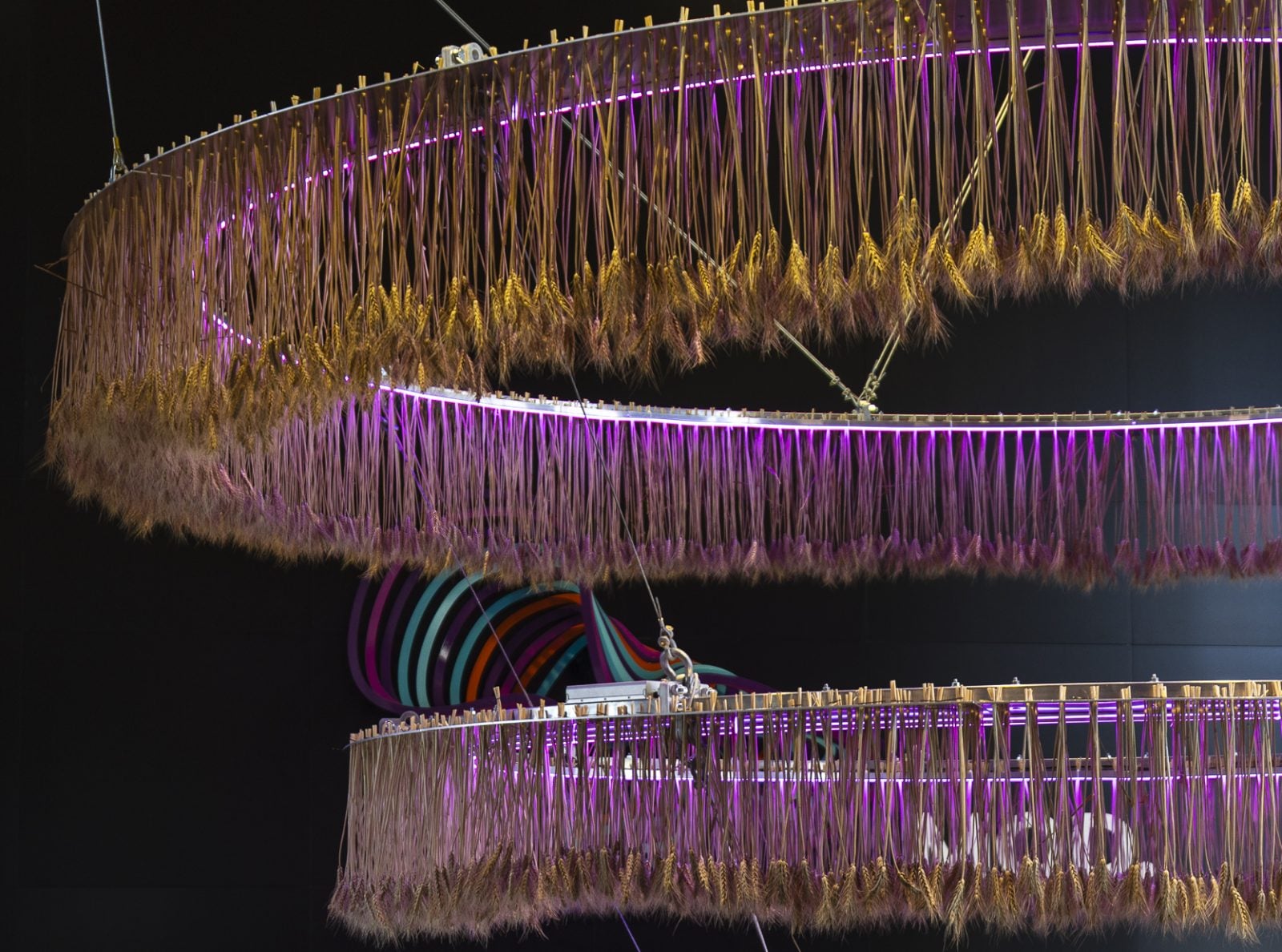
Exhibit Details
Open JanNov 2026
- How can we cultivate change?
- Delve deeper
Change doesn’t happen overnight. It grows slowly, shaped and reshaped in response to our actions over time. Nurturing the future into being begins with planting seeds today.
As you step into the MOD. Foyer, take a moment to look up. This sculpture was inspired by groundbreaking plant phenomics research at Adelaide University’s Waite Campus, where scientists have access to world-class infrastructure to study plants and seeds under various stress conditions.
These three concentric rings suspend thousands of dried wheat stalks illuminated by ultraviolet LED light. By 2050, global demand for wheat is expected to rise by 60%, meaning we’ll need to dramatically increase production without compromising soil health. Discover how this research can support the future of sustainable agriculture both on this planet and beyond.
What seeds should we plant to feed the future?
Wheat is the world’s most widely grown crop, supplying about 20% of our daily calories and protein. By 2050, global demand for wheat is expected to rise by 60%, meaning we’ll need to produce twice as much per year to feed everyone. Researchers at Adelaide University’s Waite Campus have access to world-class infrastructure and study plants under various stress conditions. Their work explores how plant traits and new farming methods can improve climate resilience in crops and build a more sustainable food future.
‘As the population grows and farmland shrinks, developing nutritious, climate-resilient crops is essential to meet future food demand.’
Associate Professor Bettina Berger, Adelaide University, Australian Plant Phenomics Network
How can ancient knowledge shape new futures?
Over 90% of Adelaide’s native grasslands have been lost through colonial practices, disrupting traditional food sources, cultural fire practices, and leading to mass extinctions throughout the living cultural landscape.
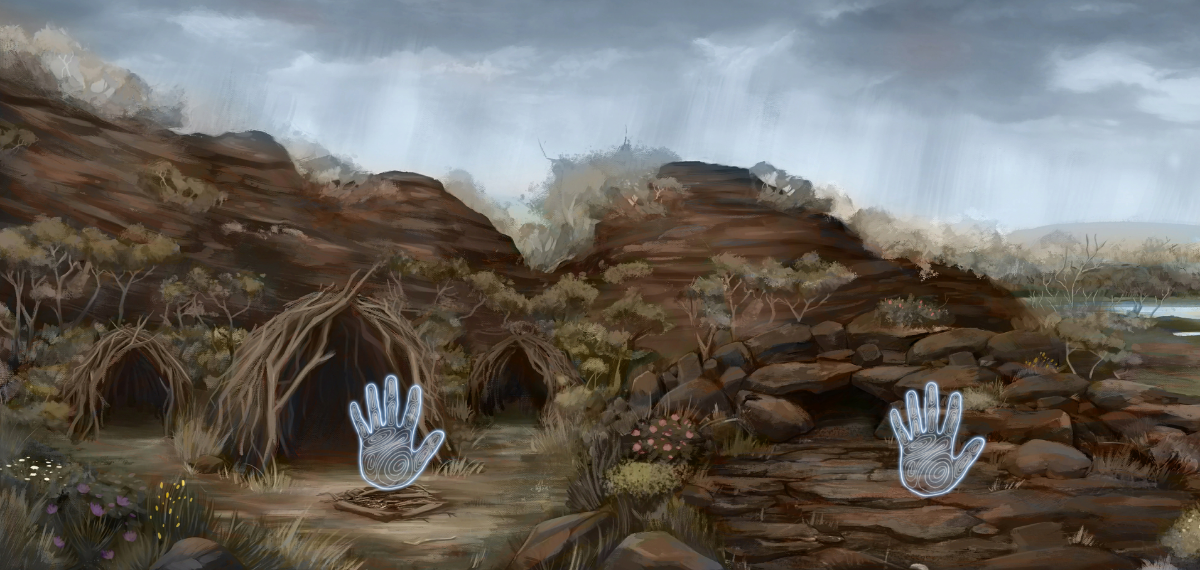
At Kanyanyapilla – Place of Many Eagles – on Mullawirra Yerta (Dry Forest Country – Kaurna Meyunna), cultural regeneration of native grasses is being led by Elder Karl Winda Telfer. Through Traditional Owner self-determination, the restoration of vital ecosystems is occurring through ancient knowledge systems connected to Country and kin.
Kangaroo grass (Themeda triandra), once a widely harvested traditional food source, is pivotal to the restoration of Country and culture. Its return strengthens cultural food systems, supports biodiversity, and reconnects community with seasonal practices.
“My ancestors walked softly in the past. It’s time to walk softly together, guided by old wisdom to find new ways for the coming generations.”
Karl Winda Telfer, Burka Senior Man
How can we grow more with less?
Growing food in space means rethinking how we sustain life. The ARC Centre of Excellence in Plants for Space is developing technologies to grow food, medicines and materials with less waste and reduce reliance on resupply, benefiting both space missions and sustainability on Earth.
Professor Matthew Gilliham, Director of Plants for Space, says they are ‘reimagining plant design allowing them to reach their maximum potential in controlled environments in optimal temperature, nutrition and light.’
Take Plants for Space’s work with duckweed: it’s a plant that doubles in size every two days, is packed with nutrients, has no waste, and can even be used to make medicines and plastics. It’s ideal for navigating the complex sustainability challenges of space.
Dr Richard Harvey, Chief Operating Officer of Plants for Space says, ‘Space is the ultimate closed loop system. If you can grow things in space, you can grow them anywhere.’
Read
- Plants to address sustainability challenges
- International consortia tackle the global challenge to increase wheat yields at the APPF
- Community gardens as pathways to community resilience? Reflections on a pilot study in Adelaide, South Australia
- Forget The Martian: SA is at the centre of space farming
Watch
Play
Explore
Credits
- Company Works Artwork Design
- James Dodd Fabrication
- Sam Songailo Technical Design
- Walls That Talk Graphics
- Associate Professor Bettina Berger, Adelaide University, Australian Plant Phenomics Network Research
- Dr Richard Harvey, Chief Operating Officer of Plants for Space Research
- Professor Matthew Gilliham, Director of Plants for Space Research
- Karl Winda Telfer, Burka Senior Man Research