Interested in how music can spark creativity?
Make it a career with Adelaide University
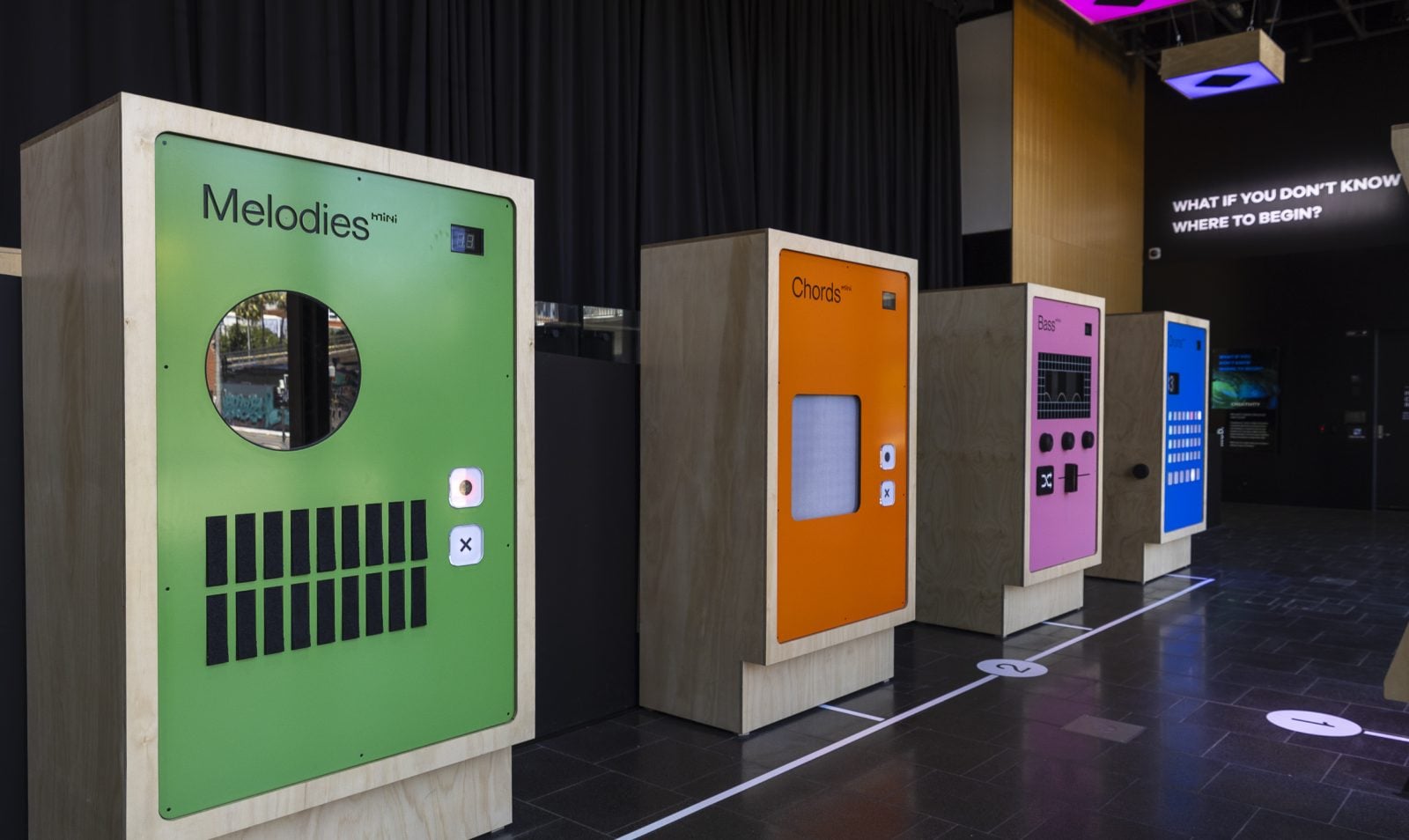
Exhibit Details
Open JanNov 2026
- What if you don't know where to begin?
- Delve deeper
Why wait for inspiration when you can make it yourself?
Every moment our brains absorb the world around us, synthesising our experiences and transforming them into radically new ideas. Science shows us that this constant loop of creativity isn’t just for artists or musicians—it’s the foundation of our everyday lives.
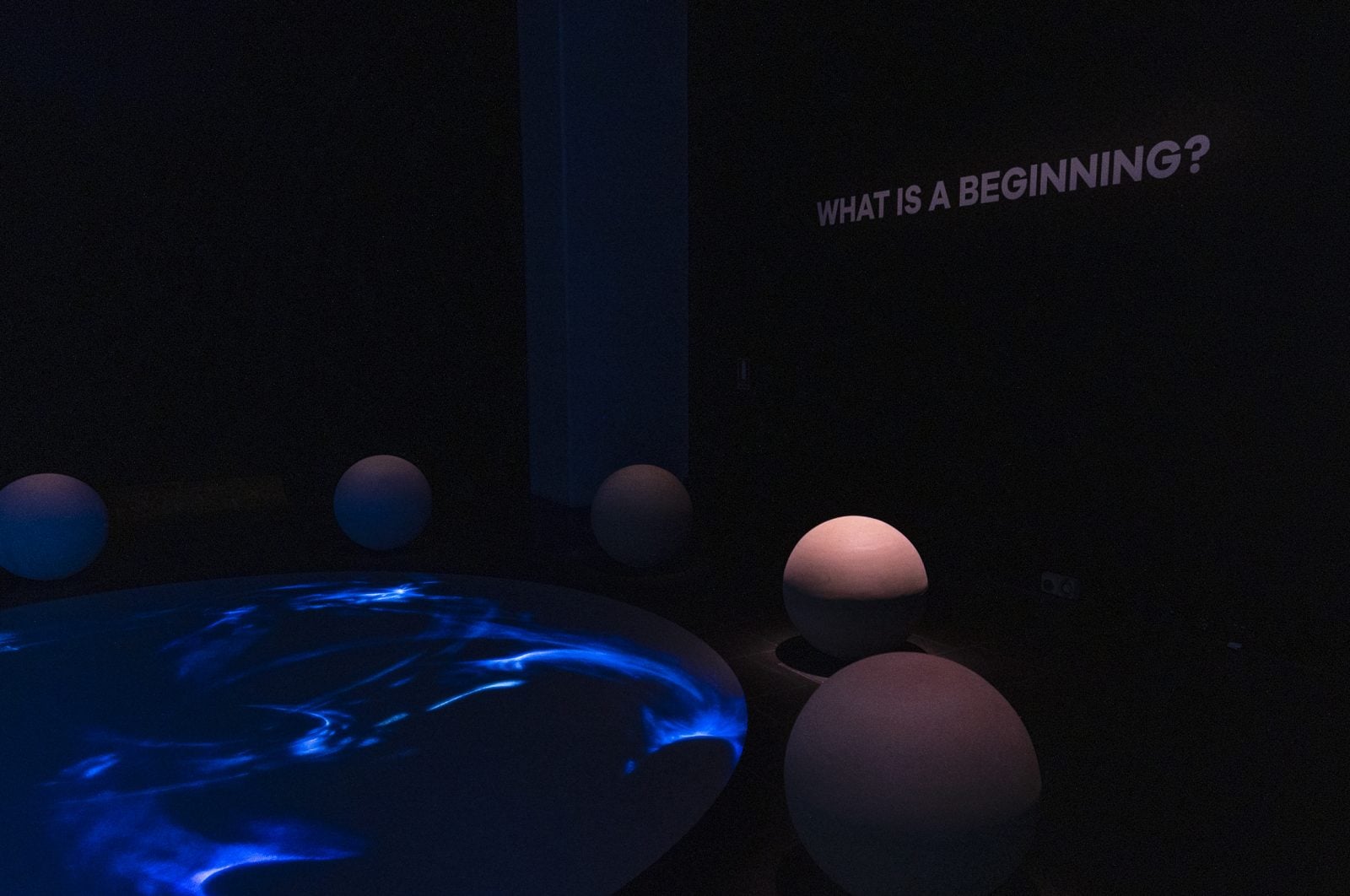
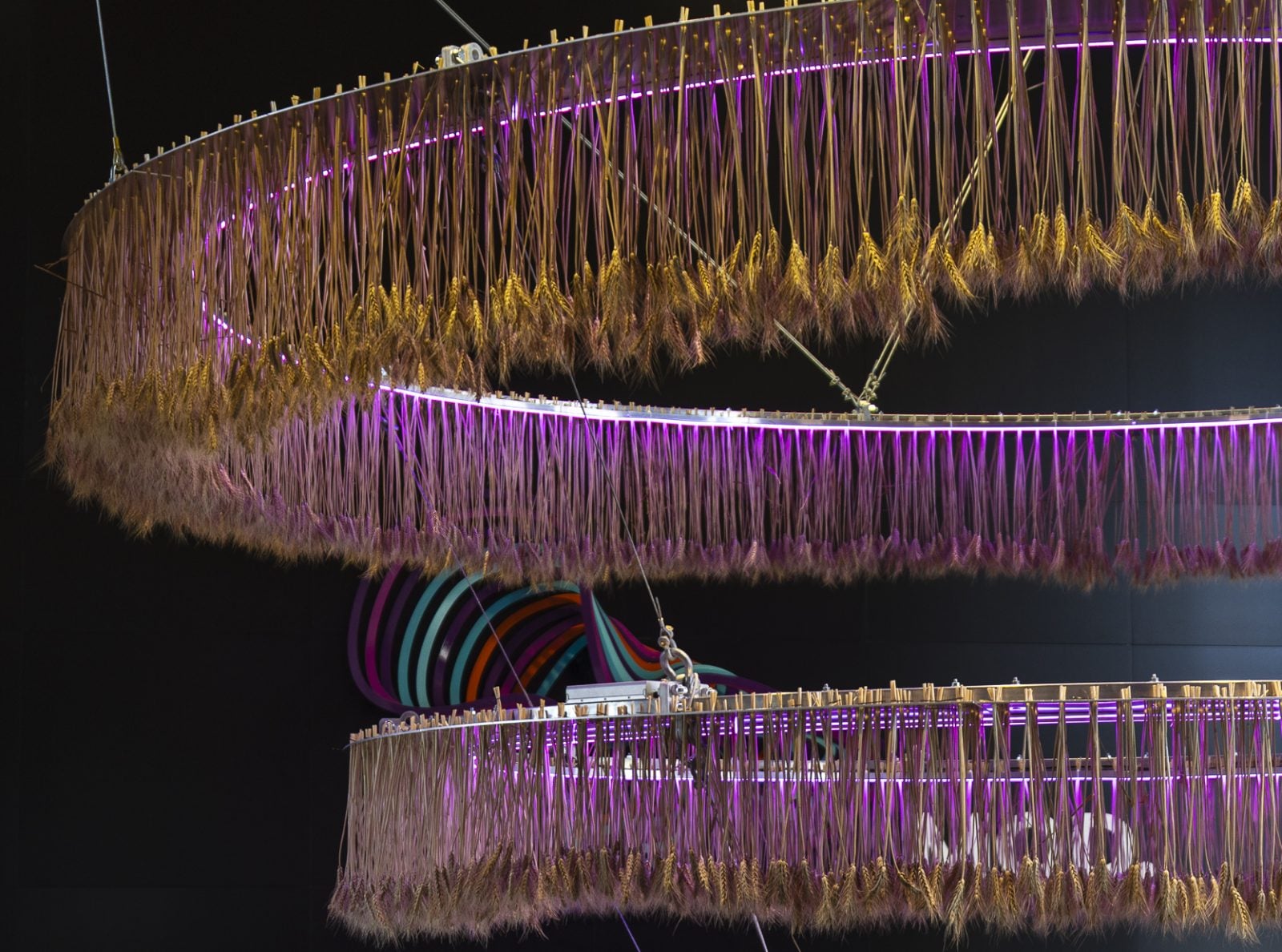
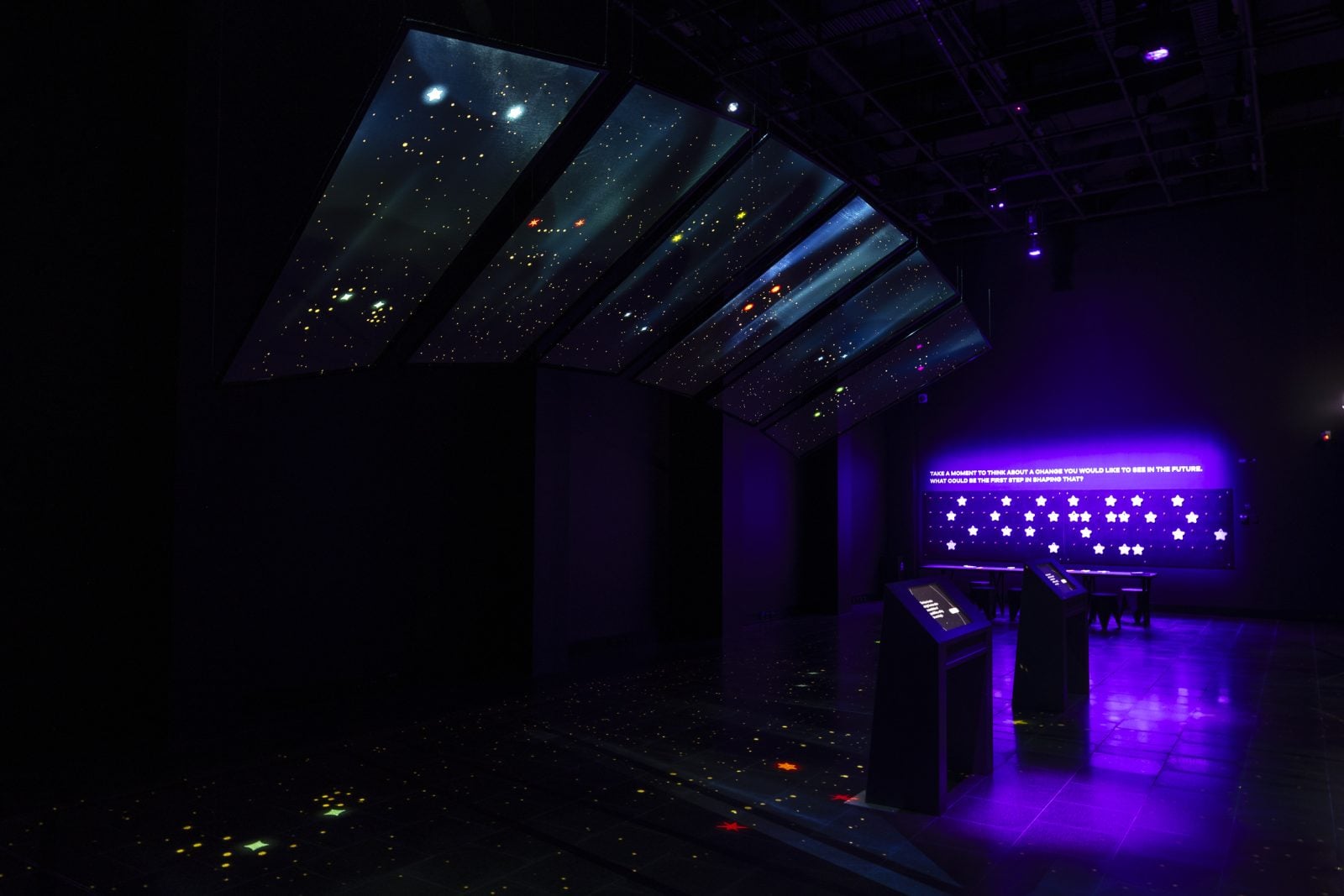
Meet MiNi. Step into an experimental sonic studio where this act of problem-solving becomes music. Explore how experimentation, collaboration, and musical composition can foster creative confidence and open up pathways to alternate futures.
Discover what’s possible when we allow ourselves to try getting it wrong before we get it right. What can you create when you try new or different ways of thinking?
The MiNi Track List
-
Creativity Builds Confidence
Track 1
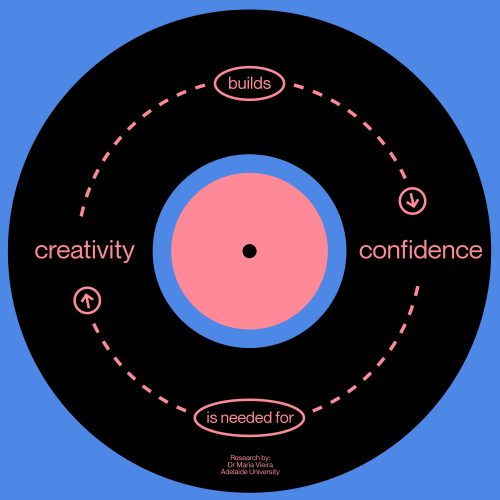
Dr. Maria Vieira, Adelaide University researcher specialising in design thinking in education, writes extensively on the positive feedback loop between creativity and confidence.
Though we might assume one needs to come before the other, in reality they are dependent on one another.
-
The Key to Design Thinking
Track 2
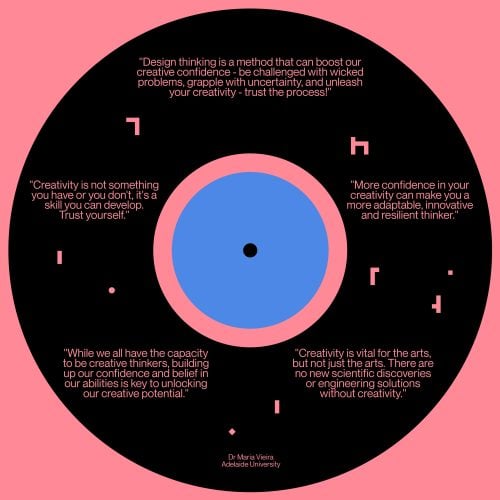
“Design thinking doesn’t have to be complicated. Remember, it is just a process that helps us solve a problem. (…) It is more than a framework. In reality, Design Thinking is a mindset.”
Dr. Maria Vieira, Design Thinking for Creative Confidence (Catalyst Report No. 18)
-
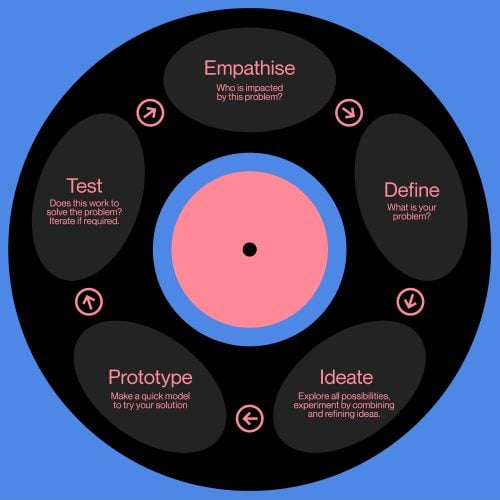
Empathise, Define, Ideate, Prototype, Test
Track 3
What are the important parts of design thinking? While there are many number of ways to break down this inherent cognitive process, these five steps can help us understand where to begin.
- 1. Empathise – Who is impacted by this problem?
- 2. Define – What is your problem?
- 3. Ideate – Explore all possibilities, experiment by combining and refining ideas.
- 4. Prototype – Make a quick model to try your solution.
- 5. Test – Does this work to solve the problem? Iterate if required.
-
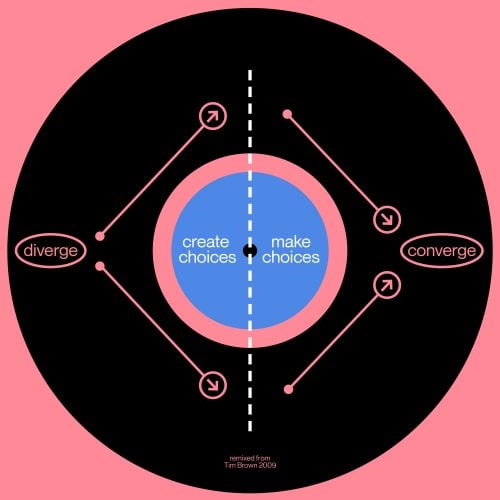
Divergence, Convergence
Track 4
Tim Brown, founder of global design and innovation firm IDEO, frequently speaks about the value of design thinking, creative leadership, and innovation. In his book Change by Design he puts forward a conceptual understanding of how we can make better solutions for everyday problems using divergent thinking (exploring many directions) and then convergent thinking (bringing it back together).
-
Weaving Together the Bigger Picture
Track 5
Emma Sainsbury, a.k.a. ‘Eluize’, is an Australian-born classically trained instrumentalist, sound designer, audio engineer, vocalist, label owner, studio operator & mentor. As an electronic artist she has taken her music far and wide, curating and creating a spectrum of house and techno.
As a music producer for MiNi she knows the struggle of combining disparate elements into a harmonious composition:
“When we’re asked to be creative sometimes it’s hard to know where to start. With sound design and music tech this this might look like – What base sound we will try first?
What happens when we manipulate it or effect it in different ways? How does it sound and feel now? And so on.”“As we combine each element the bigger picture begins to come into focus, then we can go back and tweak. It’s a constant listen, question, feel, adjust, repeat (…) I’ve enjoyed weaving all these threads together.”
Emma Sainsbury, MiNi Music Producer
-
Designing MiNi with Creativity in Mind
Track 6
Luke Million, a.k.a. ‘The Synth Lord,’ is an artist and producer from Adelaide, South Australia. For over 15 years Luke has shared his love of vintage synthesizers and drum machines, beaming their analog waveforms over radio stations and dance floors across the world.
As a music producer for MiNi he reflects on problem solving in the creative process:
“We started with a creative vision of what Mini would sound like and problem solving began as we worked out the best way to achieve this vision – How will the individual components work together? How will we create audio? What sound design tools can we use?”
“Creativity is at every step of the problem solving process.
Every potential solution to a problem is spawned from creative approaches that continuously repeat until the final solution is achieved.”Luke Million, MiNi Music Producer
Read
- Artificial Intelligence, Creativity, and Intentionality: The Need for a Paradigm Shift
- Bridging the Gender Gap in STEM: The Impact of Self-Beliefs on Domain-Specific Creativity among Secondary Students
- The Intersection Between Music and Creativity
- Design Thinking for Creative Confidence
Watch
- Wendy Carlos demonstrates her Moog Synthesizer in 1970
- Maria Vieira on Design Thinking for Teachers
- David Kelley on How to build your creative confidence
Play
Listen
Explore
Credits
- Company Works DESIGN, CREATIVE, PRODUCTION
- Luke Million MUSIC PRODUCTION
- Emma Sainsbury MUSIC PRODUCTION
- James Dodd FABRICATION
- Sam Songailo TECHNICAL DESIGN
- Max Brading PROGRAMMING
- Miles Dunne TECHNOLOGY INTEGRATION
- Dr Maria Vieira RESEARCH
- Sebastian Tomczak CONSULTANT