
Posted 9 Jun
 MOD.
MOD. 
National Reconciliation Week 2026 inspired us to reflect on the First Nations artists, researchers, storytellers, and cultural leaders that have worked with us on our current exhibition; BEGINNINGS.
During Reconciliation Week, MOD. hosted a lunchtime talk with Lawson Dodd, a Kaurna/Narungga/Ngarrindjeri artist and designer, and Associate Professor Skye Akbar of the Waljen group of the Wangkatja Peoples, who is an Enterprise Fellow with the College of Business and Law at Adelaide University. The talk aptly titled, ‘Unpacking Packaging,’ was held in The Convenient Store, a pretend shopfront installation that is part of the BEGINNINGS exhibition. The exhibit is embedded with marketing research and detailed design that encourages MOD. visitors to consider how their choices have value and what might influence our consumer habits outside of budget.
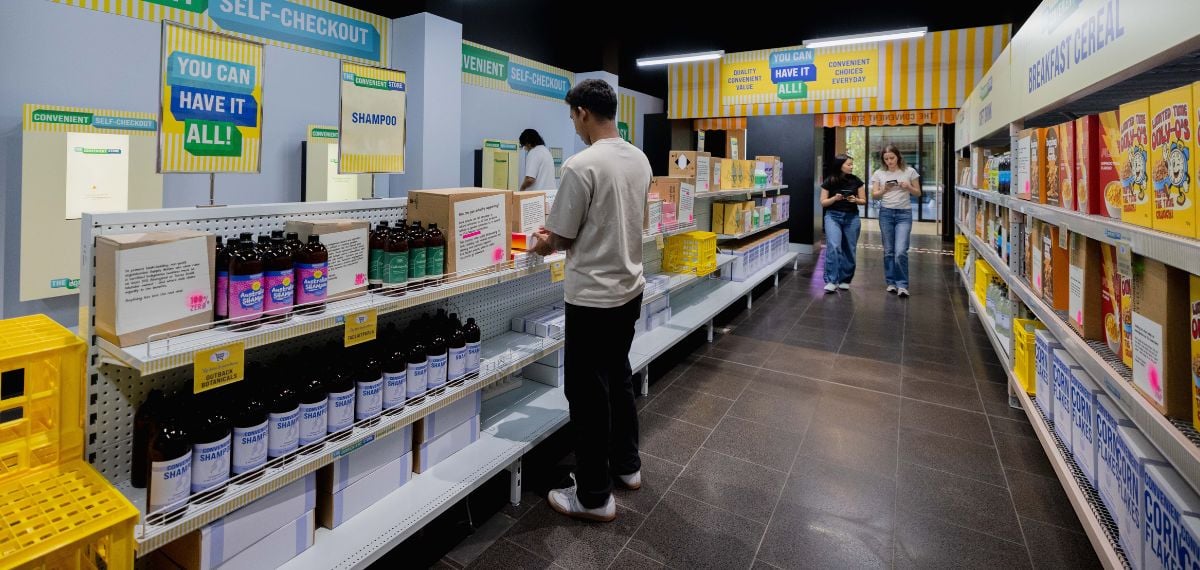
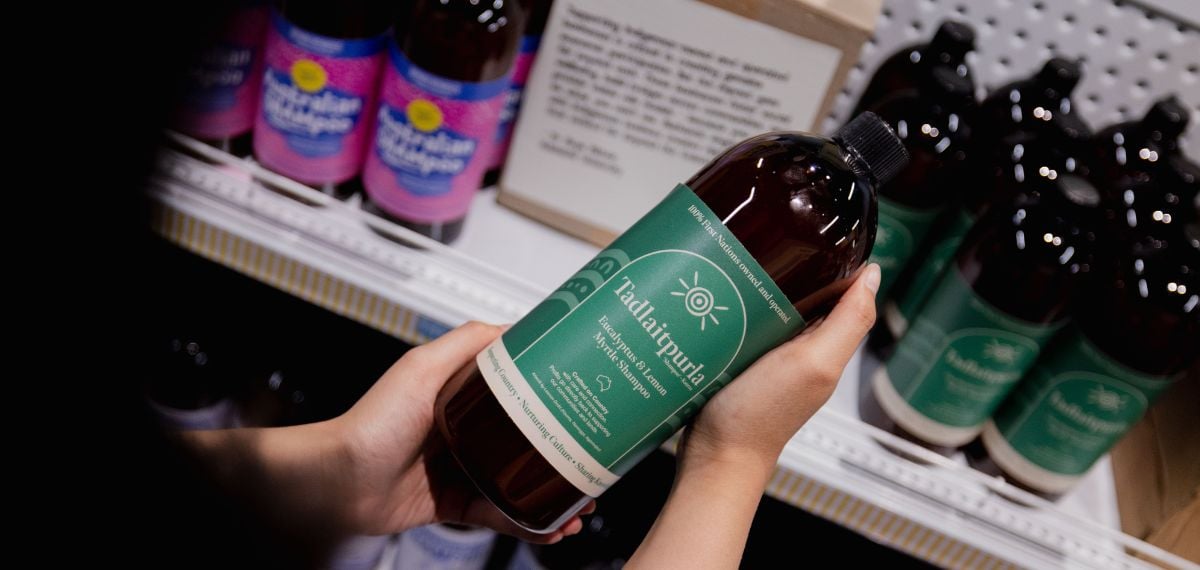
Lawson designed two labels for the shampoo bottles that sit within The Convenient Store shelving display, the mock brands are ‘Australian Shampoo’ and ‘Tadlaitpurla’ (the Kaurna word for shampoo). The two differing designs aim to highlight differences between what a First Nations-led product might look like compared to one that only appears to supports community. For ‘Tadlaitpurla’, Lawson consulted with relatives about the use of Kaurna language and made the artwork himself, which is acknowledged on the packaging. There are also other hints on the labelling that indicate this product is an Aboriginal business, including the sentences; “Crafted on Country with care and connection. Profits go directly back to supporting our communities and lands” and “100% First Nations owned and operated”. When designing ‘Australian Shampoo’, Lawson used artificial intelligence to help create the artwork and branding, a technique that is becoming more common. He was also interested in seeing how AI might interpret the idea of an “Australian shampoo” and how the artwork might reflect that of First Nations artists, raising another ethical consideration and tactic for spotting “product washing”. This is commonly seen when an item for purchase is presented in a way that appeals to a consumers ideals or identity while not legitimately supporting them. The ‘Australian Shampoo’ packaging states that it is “Inspired by ancient Aboriginal traditions” and that “Natural products are sourced from Australian Native Plants” but it also shows that it “Contains 5% natural ingredients” which is not a lot and is “Proudly bottled overseas”. While the large heading and imagery indicates towards a product that could be a product that supports First Nations people, a closer look reveals that it doesn’t.
Associate Professor Skye Akbar spoke about why this might occur: “In marketing research, we talk about distinctive assets and that is something we can visually recognise, or maybe we can recognise a sound or tone or shapes as being kind of Indigenous inspired. That’s sort of the elements that people might use to make things look Aboriginal, even if they aren’t. And the reason that’s a problem, we can’t protect the intellectual property of Aboriginal people as a group because Australian laws don’t work in that way. Only individuals and businesses and corporations can sort of protect there IPs.”
And it is not just everyday products that get presented in this way, the tourism industry is also a place where businesses may appear to offer authentic First Nations experiences without involvement from Aboriginal and Torres Strait Islander communities, which can be more difficult for a consumer to discern. Skye recommends doing a bit more research into products and experiences before jumping in, “we need to sort of stop for a minute and do a bit more of an information search than we normally do… What I tend to do is because we have algorithms, I train my algorithm to show me what I want to see. I will, if it shows me something I’m not interested in, I’ll start looking up Aboriginal businesses, Aboriginal tourism or whatever, and then I’ll start clicking through and sort of trying to collect information over time on categories that I might be looking at buying from in the future. I realise I’ve got a PhD in Marketing, so I’m not a normal consumer but this is the kind of stuff I do, collect information over time and so then when something comes up where I need to invest in that area, I’ve got that information there.” An example Skye gave was that she collects, or saves, different Aboriginal businesses that come up on Instagram throughout the year for when Christmas comes around, she will then invest in those businesses while buying gifts for her family.
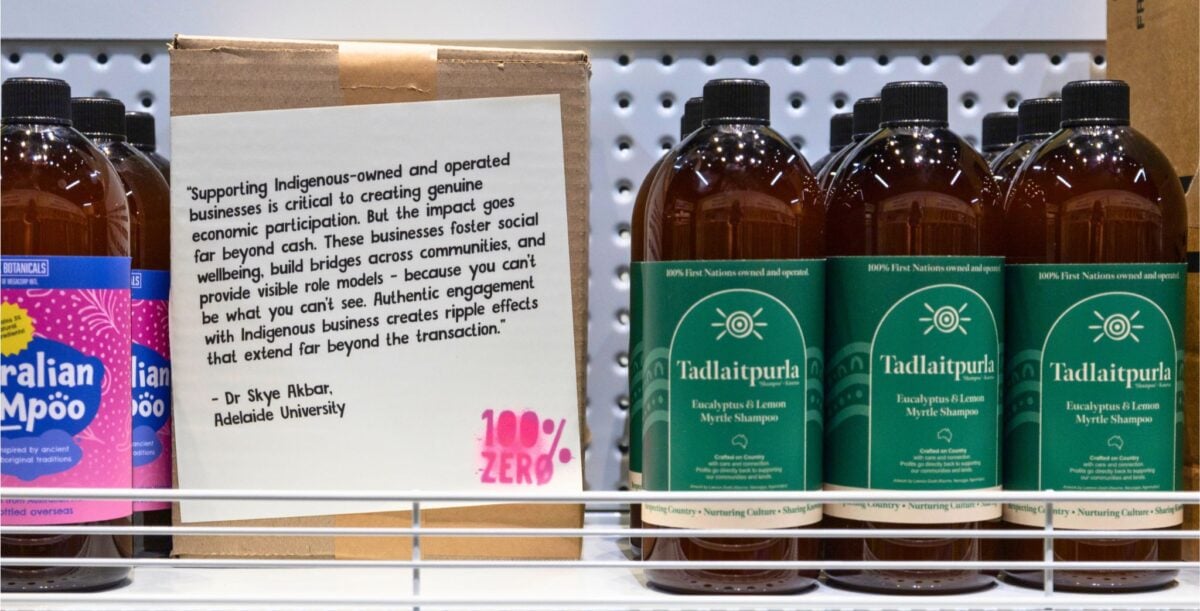
Everyone is susceptible to brand and experience washing, but looking a bit closer and spending a little more time to research what you are investing in can make a huge difference. We will leave you with a quote from Skye that you can find if you explore The Convenient Store: “Supporting Indigenous-owned and operated businesses is critical to creating genuine economic participation. But the impact goes far beyond cash. These businesses foster social wellbeing, build bridges across communities, and provide visible role models – because you can’t be what you can’t see. Authentic engagement with Indigenous business creates ripple effects that extend far beyond the transaction.”