Posted 10 Aug
 Frankie Acacia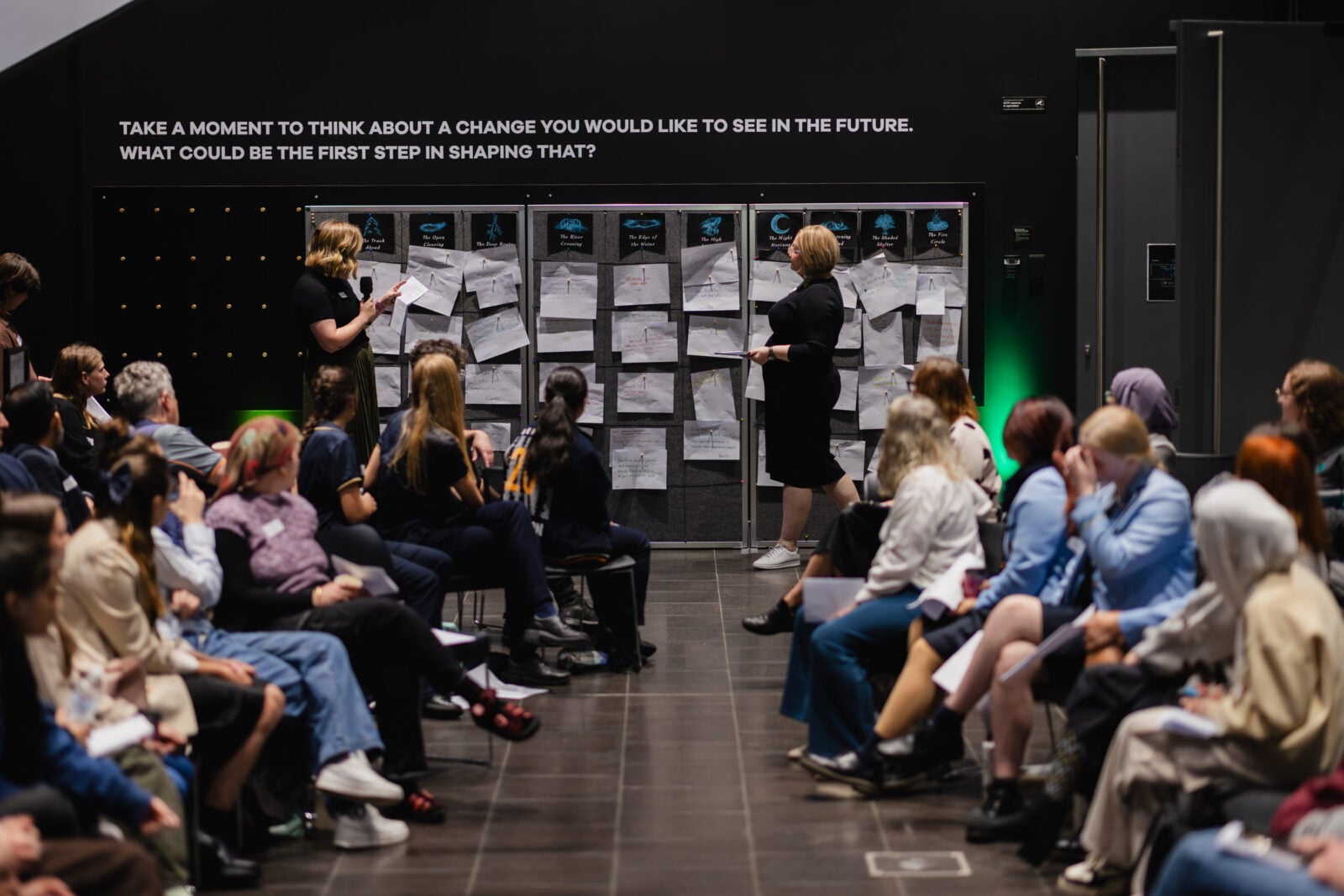
In May, we welcomed researchers, artists, students, industry professionals, teachers and community members to MOD. for our Future Themes Forum, a day dedicated to exploring the ideas, questions and challenges shaping the world ahead.
The Future Themes Forum has been a key part of MOD.’s exhibition development process since 2019. Every few years, we bring together people for a series of conversations designed to uncover emerging ideas, tensions and opportunities that might inspire future exhibitions.
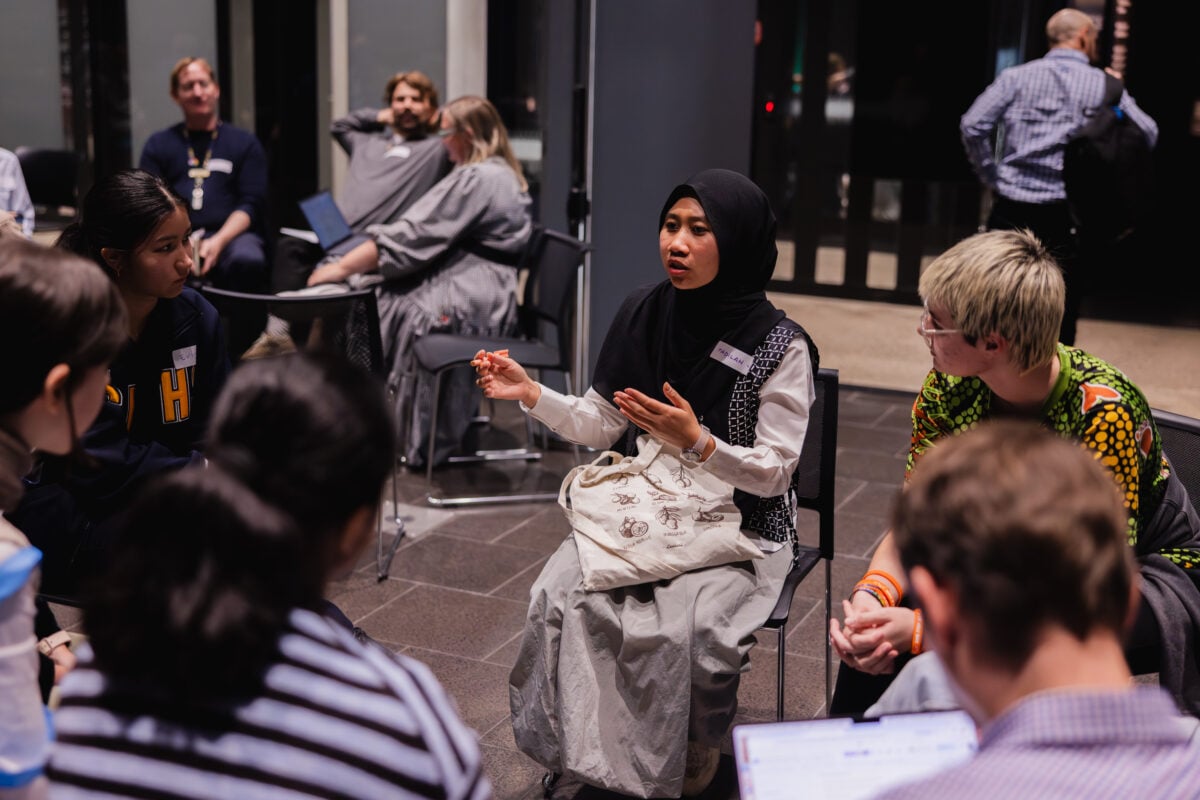
Rather than following a traditional conference format, the forum uses Open Space Technology, a facilitation approach developed by Harrison Owen after he observed that the most valuable conversations at conferences often happened during the coffee breaks. Open Space flips the usual structure on its head: participants set the agenda, choose the conversations they want to join, and are free to move between discussions as new ideas emerge. The result is a dynamic, participant-led environment where curiosity drives the conversation.
This year, we expanded the Future Themes Forum beyond a single event, running dedicated sessions with the MOD. Youth Board and students from Whyalla Secondary College. By including both metropolitan and regional perspectives, we wanted to better understand the ideas, concerns and aspirations that young people across South Australia are bringing to conversations about the future.
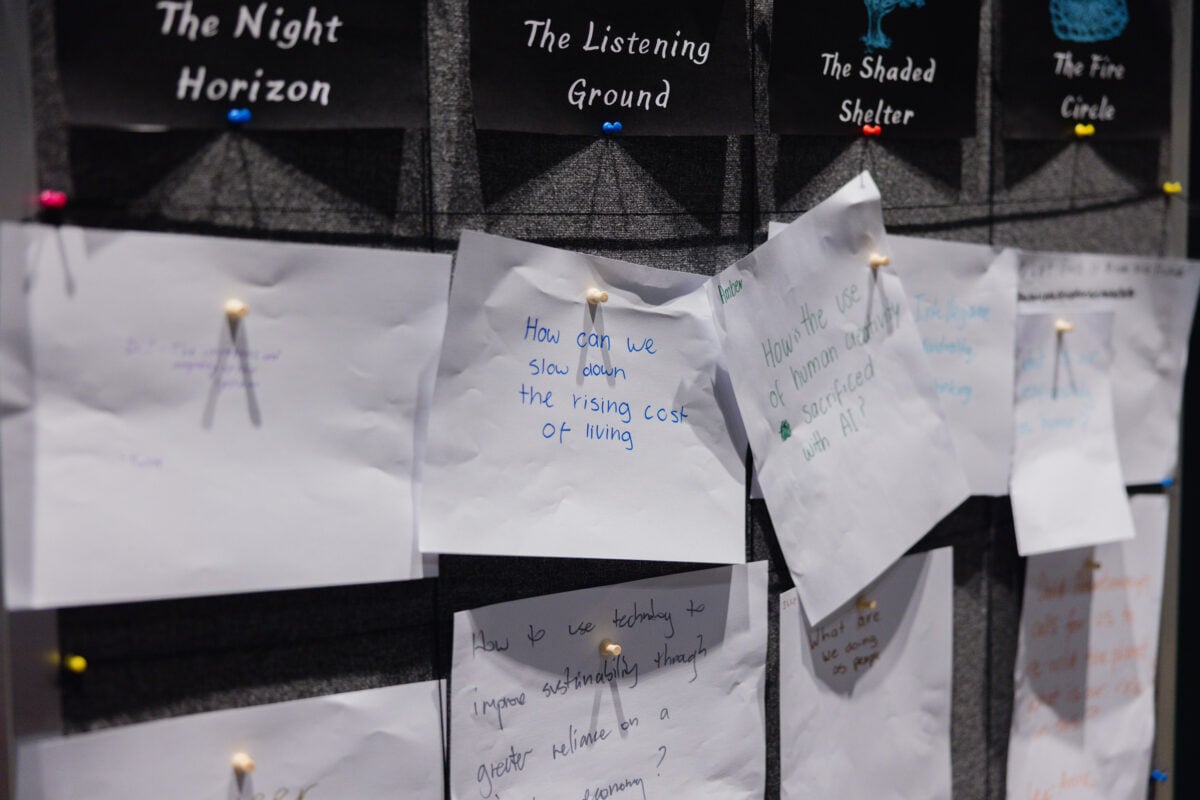
Around each table, participants explored topics ranging from artificial intelligence and accessibility to child protection, rewilding, gender, community and even the possibility of extraterrestrial life.
Within these discussions, participants wrestled with questions of responsibility, influence and power. How much control do individuals have over technologies that increasingly shape everyday life? What responsibility do communities, governments and institutions have in responding to emerging challenges? While many conversations acknowledged feelings of uncertainty, they also returned to the importance of collective action, local communities and the belief that change is still possible.
Participants also repeatedly challenged simple, binary ways of thinking. Conversations resisted easy answers or clear divisions between “good” and “bad”, “human” and “machine”, or “nature” and “technology”. Instead, many explored the messy spaces in between, recognising that the future is unlikely to be defined by straightforward choices, but by navigating complexity, compromise and competing values.
Questions about what it means to be human surfaced in almost every discussion. Whether considering the rise of AI, the future of work, accessibility, relationships or creativity, participants reflected on the qualities they believe are worth protecting; empathy, curiosity, connection, imagination and care. Technology itself was rarely the focus; rather, it became a lens through which to ask what kinds of futures allow people to flourish.
Perhaps most striking was the role of uncertainty. Rather than treating uncertainty as something to eliminate, many participants acknowledged it as an inevitable condition of the future. The challenge, they suggested, is not to predict exactly what comes next, but to develop the skills, relationships and perspectives needed to navigate change together.
The Future Themes Forum demonstrated that conversations about the future are rarely only about the future. They are opportunities to examine the present, and what is relevant to our lives outside of the walls of the museum. There is never a single answer to what “the future” should be. However together we can ask better questions about how futures are made, who gets to shape them, what responsibilities we carry, and what kinds of worlds we might make possible.