
Posted 12 Jan
 Brooke Ferguson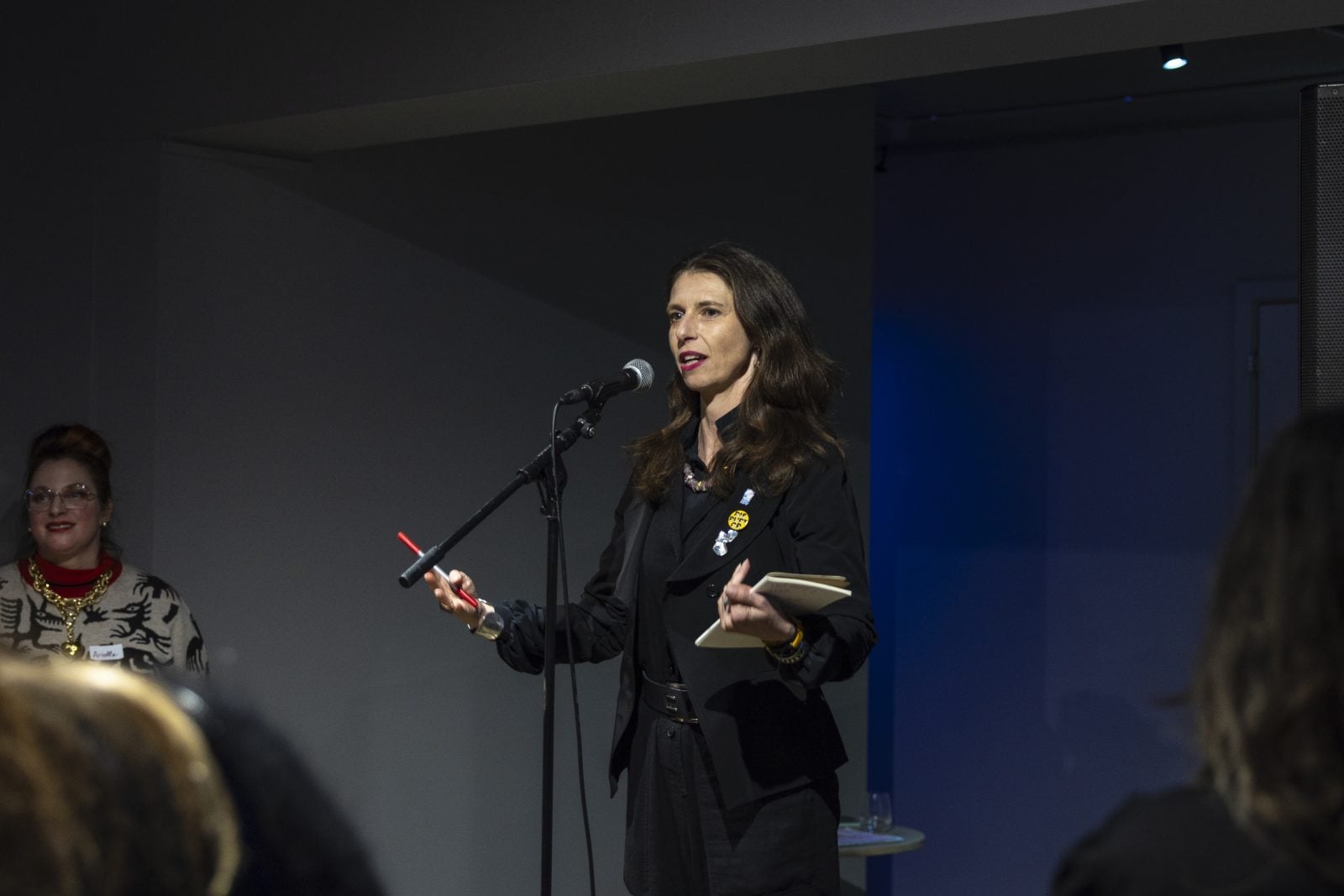
Futurist-In-Resident and SA Water Visiting Research Fellow, Maggie Greyson, spent a month with MOD. in 2025. She is a globally recognised futurist and designer who is celebrated for her award-winning work in both fields. She specialises in helping organisations and individuals envision the future, enabling them to make informed decisions for now and later. Maggie is passionate about helping museums recognise their potential in helping the public become comfortable with complexity through futures work. Read Maggie’s reflections on her residency with MOD. below.
2026 Maggie Greyson
What’s the Maggie x MOD. moment you would like to share?
2025 Maggie Greyson
I had the great fortune of meeting Dr Kristin Alford, MOD.’s Founder and former Director at the Dubai Future Forum. She trained with Richard Slaughter and Peter Hayward (internationally renowned professional futurists), who enable others to research futures through a kaleidoscopic lens based in philosophy and other ways of knowing. They were formative in my understanding of futures studies and how to provide care when interrogating assumptions, imagining alternative futures, and designing artifacts that energise change. Kristin Alford’s invitation to be the Futurist-in-Residence was a return to my homebase in futures studies and scenography.
2026 Maggie Greyson
What were you expecting?
2025 Maggie Greyson
I expected that MOD. would be a place-based experience of futures that represent the voices of youth, academics, experts, and as a collective in Adelaide. Instead of experiencing the exhibition as a reinterpretation of their thoughts, I was learning from where they left off.
2026 Maggie Greyson
What question did you ask at MOD.?
2025 Maggie Greyson
Have you ever crashed a party with an extraterrestrial network of alchemists? When was your last overnight in a floating library of magic spells? Do hypnotists prefer peanuts or chips at a meetup? What’s the secret handshake that fossilised ancestors use to recognise each other at the mall? And… How does MOD. design a poetic, immersive and interactive experience for futures thinking?
Who are the knowledge amplifiers at MOD., and what is the constellation of stars that they look at to make sense of the future? Wondering about their unique approach to catalysing conversations about futures got me on a flight all the way from Canada, twice, in 2025. I was able to sit down with some of the alchemists, muses, and futurists behind the scenes at MOD.
They co-create in a modest office using a Miro board and some sticky notes. They have normal looking computers, carpet, some plants, and a book shelf. You’ve probably seen one just like it. But there’s more than meets the eye: they co-create with tens of thousands of thinkers asking the universe millions of curious questions. You can read more about the research process here.
2026 Maggie Greyson
How is MOD. a futures-oriented museum?
2025 Maggie Greyson
I worked with Kristin as a reviewer on the book Cultivating Futures Thinking in Museums. These are her words edited for brevity; “A whole new class of museums are emerging. Future-oriented museums challenge power, seek diverse perspectives, and incorporate new practices, with a strong connection to place and a clear sense of purpose.”
The exhibitions at MOD. are inseparable from the organisation’s philosophy. I’ve stumbled in describing the FOREVER (2025) exhibition to someone who has never been to MOD. There is no camera angle wide enough to capture the Design Principles in action.
As a result, I am creating a handy-dandy DIY guidebook for futures-oriented museum fans based on ideas I generated while serving as a Futurist-in-Residence. MOD.’s methodology connects tiny points of light from around the world into a multi-faceted approach to universal themes. The core of their methods lies in what I might describe as a “Rotating Futures Wheel”, inspired by Jerome Glenn.
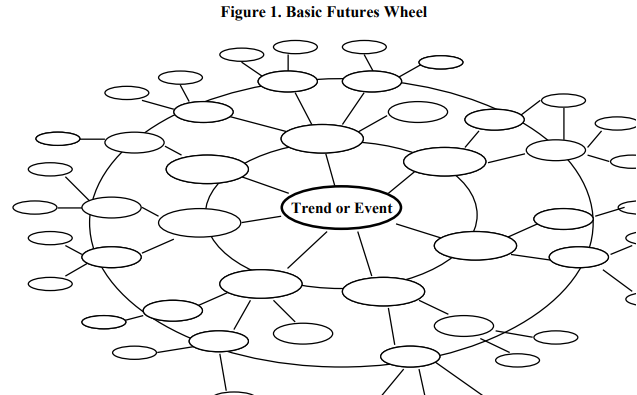
The Futures Wheel is designed initially as an impact analysis research tool that looks like a mind map. When I use it with clients, I put a statement of fact in the centre and interrogate it through a foresight framework. “If this is true, then what’s the impact on…?” As the question about impacts gets repeated, the wheel grows larger, and we can start to see some of the complexity of an evolving scenario.
It’s early days for an illustration of what a Rotating Futures Wheel might look like, so I will only describe it in words here using MOD. as an example.
MOD. has a core group of people with diverse creative and STEM backgrounds. They manage a creative process in dialogue with a youth advisory board, artists, indigenous peoples, international luminaries, local community members, and university subject matter experts. These are the tens of thousands of thinkers asking the universe millions of curious questions, and MOD. is actively listening for insights flowing between them. This massive sensory array prioritizes a rich diversity of thought, ensuring that a variety of perspectives are woven into the foundation of every project. It looks like the sky on a clear night in the outback miles from the nearest outpost. Few constellations are identifiable because all the stars are burning brightly.
The second phase of the process is a sophisticated distillation. The team examines their massive cluster of inputs and identifies the themes that carry the most tension and intellectual curiosity. They look for topics that spark “Why?” or encourage a deep look at ethical boundaries. By narrowing their focus to these high-vibration “unknowns,” they ensure that the resulting exhibition is dense with opportunity for discovery. They are creating a star map with new constellations on it
The final output of this process is the creation of a Domain. By the time these ideas reach the gallery floor, the refined clusters have been transformed into crystalline facets of the key exhibition theme. These aren’t just displays; they are immersive ecosystems that represent the intersection of many different fields of study.
By describing the exhibition design process this way, we can start to see how MOD. empowers the visitor to come up with their own conclusions to open questions. Their “Rotating Futures Wheel” approach provides a clear framework (the “light touch”) and rich research data (the “deep dive”), while leaving intentional space for visitors to bring their own lived experience to the table. As a researcher, I find this methodology to be incredibly effective. It provides the structure for an inquiry while inviting everyone who walks through the door to draw their own conclusions about what the future might hold.
The sourdough version of MOD.’s methodology. This is a speculative recipe for building your own futures-oriented museum in the comfort of your living room. Results may vary.
Making the starter
Kneading the dough
Half baked
Opening Day
Catalyzed by my Futurist in Residence experience, I am clearer about uncertainty and what a gift it is. Thanks to MOD.’s open-ended questions on the walls in each gallery, it’s a generous knowledge-building experience. I feel that it is important to note here that it is at once, a subtle and powerful invitation for more equitable spaces.
I thank the sponsors of the residency, SA Water and all the alchemists, muses, and futurists I had the pleasure of working with at MOD, especially Kristin Alford, Brooke Ferguson, and Lisa Bailey. The two-week residencies bookended the year, making 2025 a transformative experience, personally and professionally, because of their care.
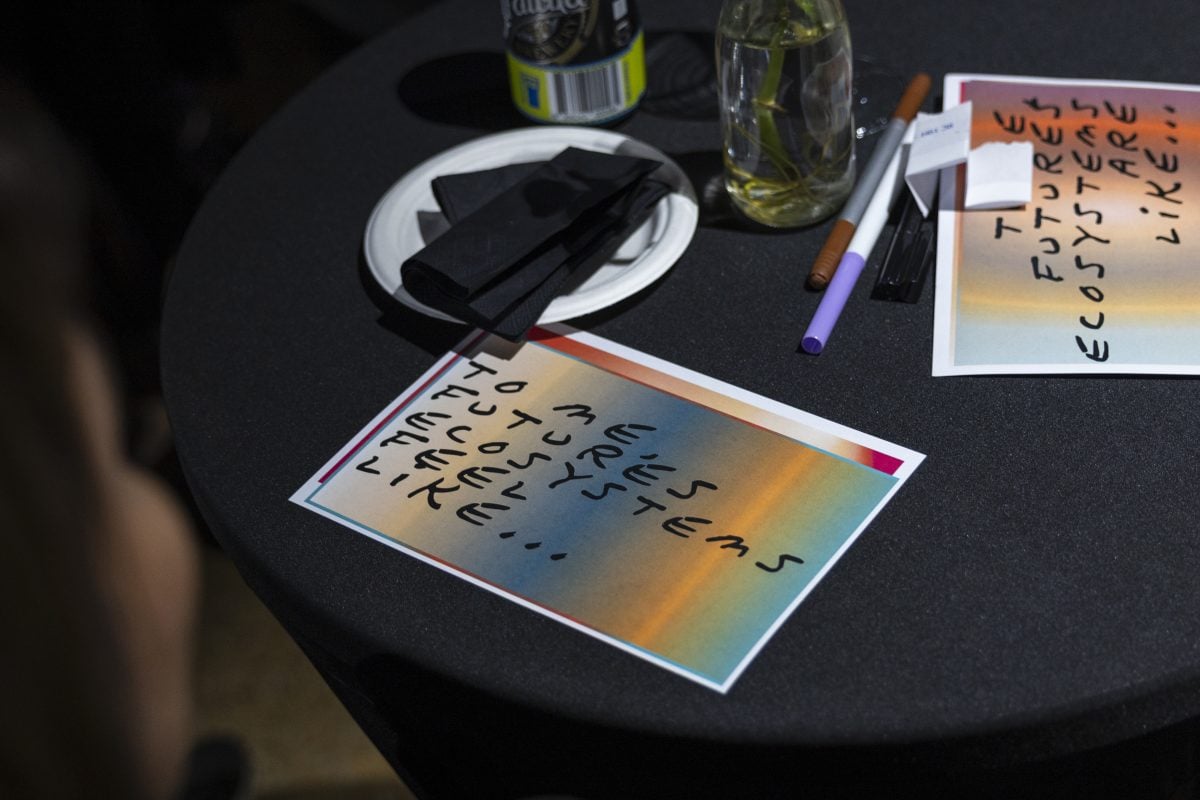
Find out more about Maggie’s work here.
Hear from the other Futurist-in-Residence who have participated in the program: