
Posted 31 Mar
 MOD.
MOD. 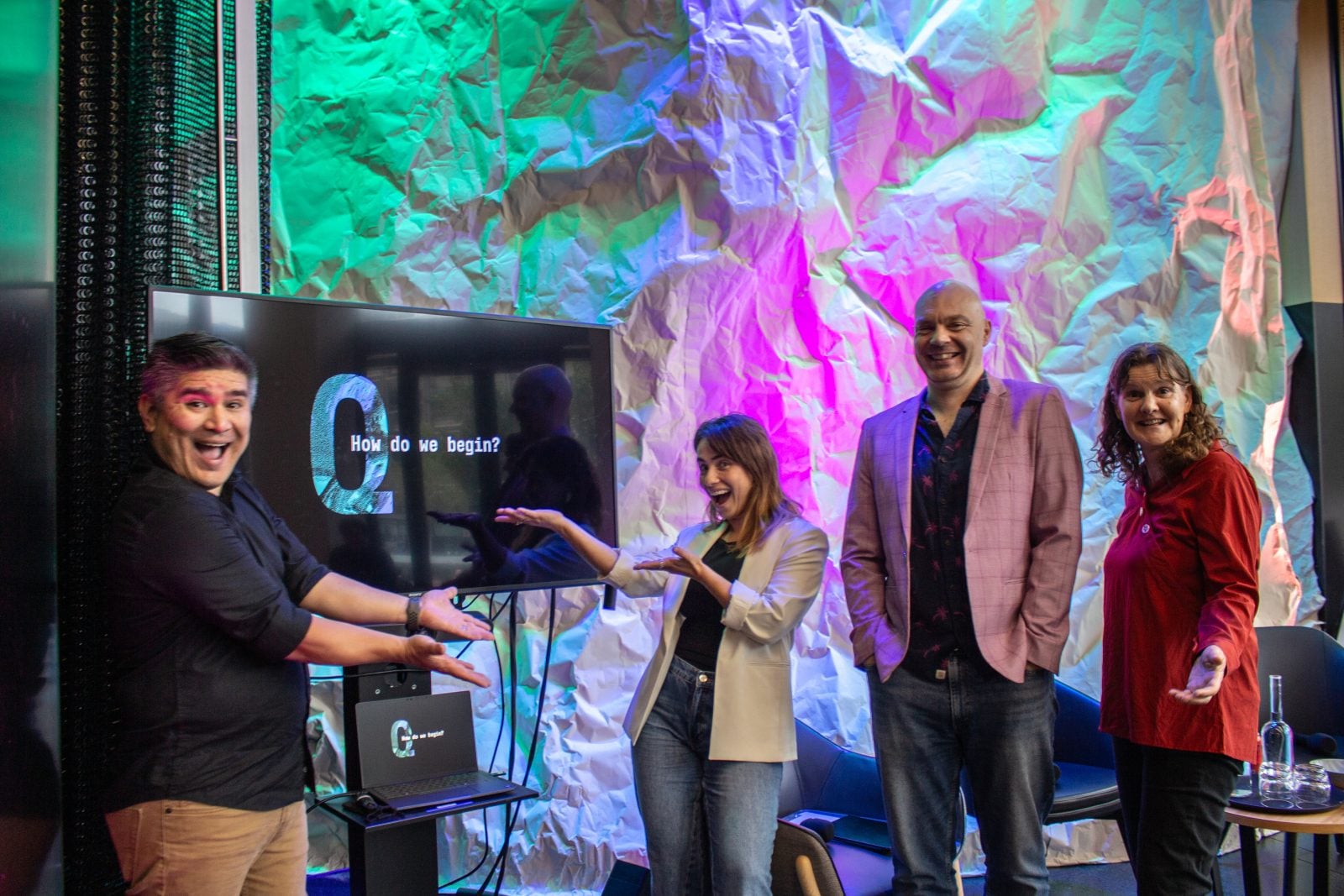
Q: What do you get when you put a comedian in a room with three university researchers and an audience? A: Q Series at MOD.
Thurs 12 March 2026
Host: Jason Chong
Researcher panel: Dr Maria Vieira, Prof Rachel Burton, APrf Cris Birzer
Q series is an ongoing event program that brings together comedy and scientific curiosity. It is a fast-paced line up involving a quick quiz, quite a good science-based demonstration and a Q&A with a panel of researchers.
It is also a bit of fun, and there is nothing like a silly little quiz to get things started. This was the first part of Q: How do we begin? Q Series, Adelaide Fringe 2026 edition. Because this is a science related event, we of course needed to include some hard to pronounce words that the host, comedian Jason Chong, declared sound like the names of Pokémon. Who’s that? It’s Blastocyst! A multicellular structure formed in the early embryonic development of mammals! And also not the correct answer for this multiple choice quiz question, sorry.
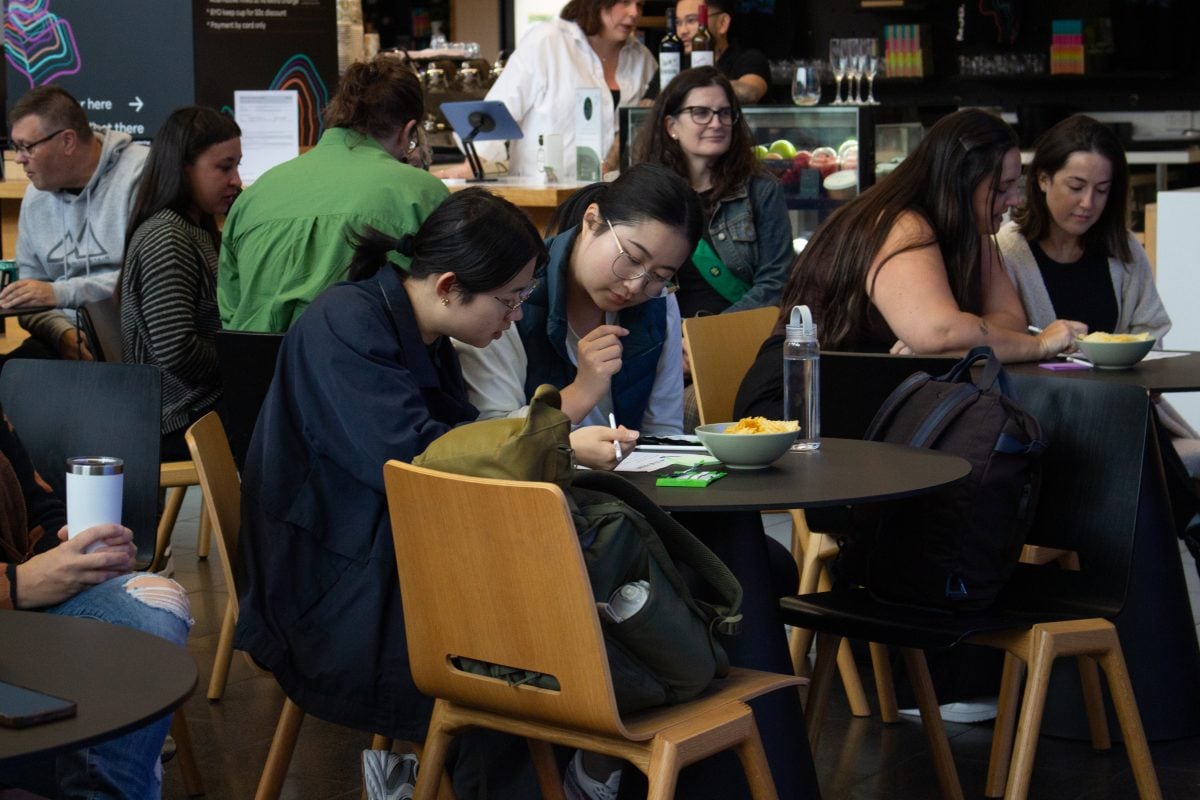
What is something that you have started recently?
Once the excitement of small thematic prizes being handed out to quiz winners passed, Jason turned the attention toward the panel of Adelaide University researchers sitting in front of the entrance to MOD.’s 2026 exhibition, BEGINNINGS.
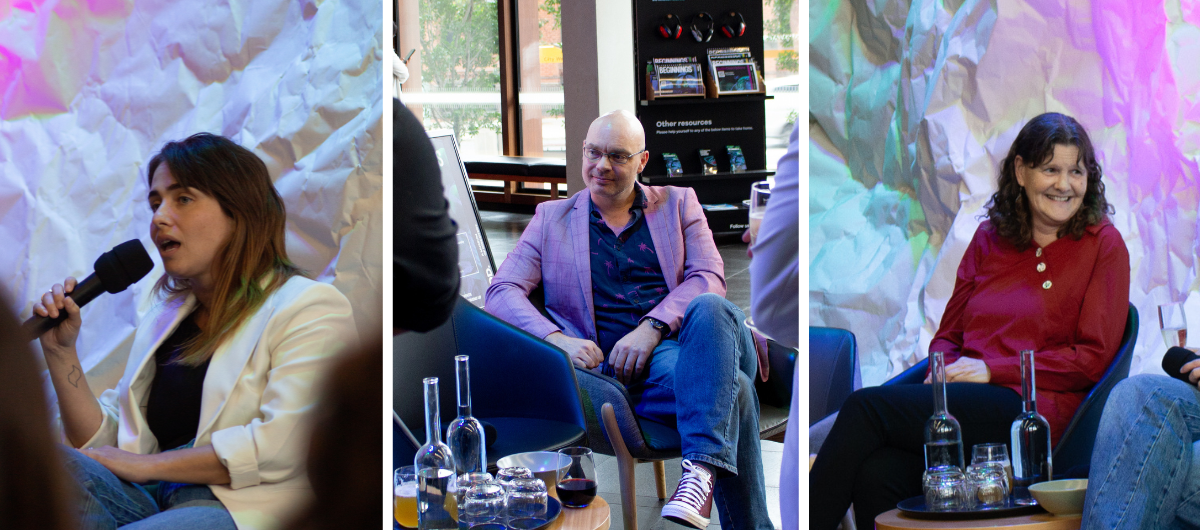
Dr Maria Vieira is a Lecturer in the School of Education with a PhD in STEM, she specialises in empowering learners through strengthening their creative confidence and has recently started playing Pickle Ball because her friends asked her to.
Professor Rachel Burton is a plant scientist and molecular biologist working with fun, new and weird plants, predominantly hemp and agave. She has also started to knit a jumper for a regrettably tall friend that will take her ages to finish.
Associate Professor Cris Birzer works in Sustainable Engineering and Humanitarian Engineering. He recently created a start-up to provide engineering students opportunities for gain hands on work experience while assisting local non-profit organisations. Just don’t call him Cristian unless he is in trouble and you are his mum.
But how do we begin?
You could try divergent thinking.
Maria asked the audience to spend one minute thinking of as many different uses for their shoes as they could. Give it a go and see how your creativity compares with the list created on the night (see list at the end of this article). The idea is to get your mind into an alternate way of thinking, taking an everyday object and imagining out-of-box uses for it. This is a tool present in design thinking which Maria utilises when working with students to gain creative confidence for STEM inspired projects. This is where we can ideate many different solutions for a problem, the “there are no bad ideas!” part.
Often associated with the arts, creativity is essential to problem solving and it is something everyone can work on. It is also very important during a young person’s years in education where the subjects that continue with creative engagement are more likely to be pursued after a student completes school. This goes for any industry and is why Maria promotes highlighting creativity in non-traditional settings such as STEM fields. Her involvement in this year’s MOD. exhibition can be found in the Street Gallery with a musical activity that incentivises visitors to try something new. See more about this gallery here.
While planting the seeds of an idea is important, what do we do with the branching options?
Plant cell walls are all around us! Luckily, they are small enough to not disrupt the view but also strong enough to help form many of the items we are all familiar with; clothing made of natural fibres, the floors we stand on, the furniture we sit at, even the free chips supplied by MOD. for this event. Rachel is very passionate about what else these natural structures can become. She demonstrated how a variety of low maintenance plants may be our best hope for a renewable future in Australia. Jason assisted by presenting a “small” pup from an agave plant, then a larger single leaf, followed by an even bigger leaf which towered above him. While he has a skeleton to help him stand up, these plants have cell walls that keep them upright.
Throughout her research, Rachel has seen the potential of agave and similar plant varieties being utilised for building materials, bioplastics, biofuel, surfboard cores, and of course the high value item of agave spirits – which you might think of as tequila, which is to spirits what champagne is to sparkling wine. Agave is easy to grow in Australia’s climate; it can be produced quickly on unused land with some plants growing up to a tonne. Which is potentially a lot of reusable coffee cups. Rachel believes that this industry could pave the way for Australia to lead a renewable and sustainable energy option, stating that the undrinkable spirits can be a great substitute for jet fuel!
Bringing it all together.
Cris used to be a rocket scientist, he now works with poo. Not something you hear every day, but a great topic to keep an audience alert towards the end of an event. His research revolves around providing access to engineering that can improve lives and prevent deaths. No pressure.
A project that he recently assisted with involved redesigning a cookstoves for areas in the world where cooking processes result in lower life expectancy through harmful emissions, mainly affecting women and children in those communities. This involved researching how people in different parts of the world cook their food, some areas are low in fuel resources and often burn wood or animal dung in their stove. Hence, Cris has worked with poo. He even had students research the burning different kinds of animal dung, collected with permission from the zoo, of course.
Through his development of humanitarian technologies, Cris led a team of engineering students to create a new type of cooking stove that reduced harmful emissions and utilised waste materials available in countries such as Fiji and India. But having a solution doesn’t always make implementation easy, how do you tell a community to change the way they have functioned for many generations?
Beginnings are sprinkled throughout these engineering projects, each step starting a new conversation and contributing to the development of dynamic solutions to larger complex problems.
What is your advice to someone wanting to start something new?
Maria believes that we should start before we think we are ready and that there is no perfect time to begin. She also suggests asking “why?” five times to really understand what might be holding you back from a new beginning.
Rachel thinks we should start things by accident. Doing something new can bring us to interesting places in research as well as our daily lives, which is exciting! And it is okay to give something a go and not be very good at it.
Cris suggests questioning everything, ask why and then jump in. Why does something seem impossible? Why can’t people access the resources they need? Why are these lights too bright? Etc. Questioning can help provide more options for our future, and curiosity helps move us forward.
Different uses for your shoes according to the Q Series audience:
Keep an eye out for our next Q Series and similar events here.